


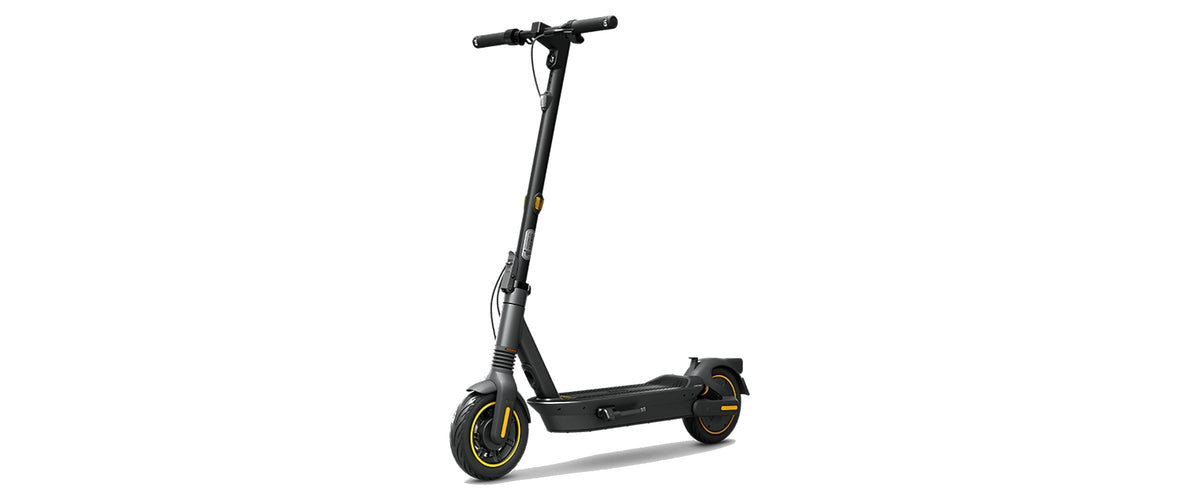
Every electric scooter and e-bike goes less far in the cold, and the makers call that normal. How much less depends on the temperature, the battery and how you ride: NAVEE says usable capacity can drop to 70% or lower below freezing, and Hiboy says range may drop by half or more as it gets colder still. The loss comes back as the battery warms up. What cold weather does make risky is charging: no maker allows charging a battery below freezing.
How much range do electric scooters lose in the cold?
There's no single figure, and the makers say so. Here's what they publish:
| Maker | What it says about cold and range |
|---|---|
| NAVEE | Below 32°F (0°C), usable battery capacity may drop to 70% of total capacity or lower. |
| Hiboy | Performance drops significantly from 32°F to -4°F (0°C to -20°C); range may drop by half or more, and recovers as it warms. |
| Segway-Ninebot | Lower range in winter is a normal effect of low temperatures; plan trips and start fully charged. |
| Teverun (Teverun USA) | Cold temperatures don't damage components but will reduce battery range. |
| INMOTION | Temperature affects available energy and range; don't rely on a fixed percentage without test data. |
From the makers' manuals, FAQs and support pages, read November 2, 2026. Celsius figures converted.
So a ride you finish easily in summer may leave you short in January. Treat the rated range on the spec sheet as a warm-weather figure, and plan winter trips with a bigger margin.
Why does cold weather cut range?
A lithium-ion battery makes electricity through a chemical reaction, and that reaction slows down in the cold. The battery's internal resistance goes up, so less of its stored energy is available, and its voltage drops further when the motor asks for power. The controller sees that lower voltage and treats the battery as emptier than it is.
Other things add to it. Cold air lowers tire pressure, and softer tires roll less easily. Winter riding often means wet roads, slush and headwinds, all of which use more energy per mile. None of this means anything is wrong with the electric scooter.
Why does the battery gauge drop so fast in the cold?
Most battery gauges work from voltage. In the cold, voltage sags more under load, so the gauge can fall quickly when you accelerate or climb, then creep back up when you stop. On a cold battery, the low-battery cut-out can also come sooner on a hill than it would in summer. That's the cold, not the gauge. See electric scooter display repair for when a reading really is wrong.
Does cold weather damage an electric scooter battery?
Riding in the cold doesn't, on the makers' word: Teverun USA says cold doesn't damage components, and Hiboy says the range comes back as it warms. Two things do cause harm:
- Charging below freezing. No maker we checked allows it. Segway gives a charging range of 32°F to 104°F, NAVEE 32°F to 104°F or 113°F depending on the model, and Hiboy 41°F to 113°F. UL Standards & Engagement warns that damage from cold or heat can lead to a battery fire later on.
- Storing it in deep cold. Each maker gives a storage temperature range, and an unheated shed or car trunk in a cold snap can fall outside it. Hiboy says never to store the battery below 32°F. See how to store an electric scooter or e-bike for winter.
Never charge a battery that is below freezing, wet, or looks swollen or damaged. If it has been out in the cold, the makers say to bring it indoors and let it return to its normal temperature before charging. If the battery is swollen, smells or got soaked, don't charge it; bring it straight in to us.
How to get more range in winter
The makers' own advice for cold-weather riding comes down to a few habits:
- Start every ride fully charged. Segway's winter guide says to plan your trips and start fully charged.
- Keep the battery warm between rides. A battery that starts the ride at room temperature delivers more than one that sat outside overnight. Hiboy says to charge at room temperature, and NAVEE says to bring the electric scooter indoors and wait if the battery is too cold.
- Ride a little gentler. A lower speed mode and smoother starts use less energy, which matters more when the battery has less to give.
- Leave a margin. Plan winter trips well inside your summer range, especially if the route has hills.
A tune-up before winter (from $50) includes setting the tire pressures, which also helps range.
Is it the cold, or is my battery wearing out?
Cold-weather loss comes back when the battery warms up. Wear doesn't. If your electric scooter still falls well short of its usual range on a mild day, or the range has been shrinking month by month, the battery may be aging; see how long electric scooter batteries last.
To tell the two apart, our technicians test the battery at room temperature, under load, so the cold isn't part of the result, and test the charger and charging port too. You get a health report and a clear price before any work. Battery load testing starts from $50 and is waived if the repair quote is over $100; range loss and won't-hold-charge repairs start from $50; charger replacement from $35 and charging port repair from $35. If the battery needs replacing, we quote it after the test.
Choosing an electric scooter for winter riding
If you ride through the winter, more battery means more margin when the cold takes its share. Look at the rated range with winter in mind, and at the water rating, because slush and road salt are harder on an electric scooter than the cold itself. See the best long-range electric scooters, our long-range electric scooters, and can you ride an electric scooter in the rain or snow for what water ratings cover and what salt does.
Winter service at Wilson's
Our technicians service every brand of electric scooter and e-bike, wherever you bought it, at our shops in New York City, San Francisco and Miami. A simple inspection is always free. Winter jobs, all starting prices with parts and labor included: tune-up and safety check from $50, winter cleanup and storage prep from $30, water and salt damage from $50 and battery load test from $50. Walk in, no appointment needed, or book a repair at the New York and San Francisco shops.
Frequently asked questions
Do electric scooters lose range in cold weather?
Yes. Every maker that mentions it calls it normal. NAVEE says usable capacity can drop to 70% or lower below freezing, and Hiboy says range may halve as it gets colder.
Does the range come back when it warms up?
Yes. Hiboy says range recovers as the battery warms. If it doesn't come back on mild days, the battery may be wearing out.
Can I charge my electric scooter in the cold?
Not below freezing. No maker we checked allows it. Bring it indoors and let the battery warm to its normal range first.
Can I ride an electric scooter in the snow?
Ice and packed snow are dangerous on small wheels, and slush and salt are hard on the electric scooter. See can you ride an electric scooter in the rain or snow.
Do e-bikes lose range in the cold too?
Yes, for the same reason: it's the lithium-ion battery, not the vehicle. Hiboy's e-bike manual gives the same warning about cold-weather range.
What temperature is too cold to ride?
It depends on the model. Segway and NAVEE give an operating range down to 14°F (-10°C) for the models we checked, and Hiboy says its S2 isn't intended for use below 14°F. Your manual has the figure for yours.
Sources, read November 2, 2026: Segway-Ninebot winter maintenance guide and Max G3 user manual (service.segway.com); Hiboy S2/S2 Pro and EX6 user manuals (hiboy.com); NAVEE GT3 and N65 user manuals and general FAQ; Teverun USA FAQ; INMOTION new owner's guide; UL Standards & Engagement e-mobility devices. Repair prices are Wilson's starting prices, parts and labor included.


