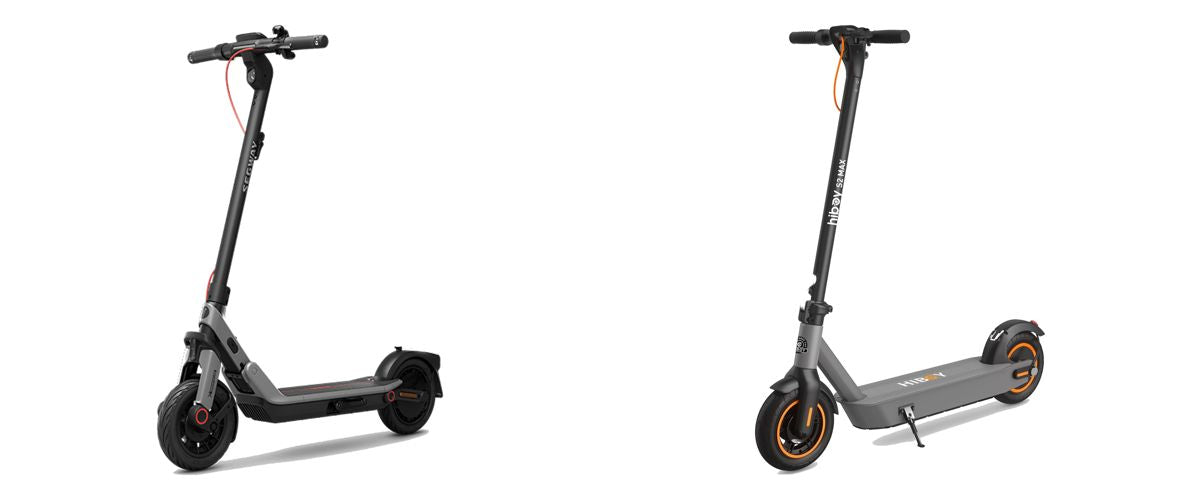
Your first ride on an electric scooter should be slow, short and somewhere quiet. Wear a helmet, start in the slowest speed mode in an empty lot or a calm street in daylight, stand with one foot ahead of the other and your knees soft, squeeze the throttle gently, and practice braking with both brakes before you go anywhere near traffic. Most riders feel at home within a few short sessions. Here's how to get there safely, from the technicians who see what happens when a first ride goes wrong.
Gear for your first ride
- A helmet, every ride. A properly fitted bicycle helmet that meets the CPSC safety standard, sitting level and snug with the strap fastened. Some states require one by age; we recommend one for everyone. Shop helmets and safety gear.
- Closed shoes with flat, grippy soles. No sandals or heels.
- Something visible. Bright or reflective clothing helps drivers see you, day and night.
- Gloves are worth it: hands go down first in a fall.
Before you ride it for the first time
Read the maker's manual, especially the parts on speed modes, brakes and folding, and set the handlebar height to suit you if the stem adjusts. Charge it fully before the first ride.
Bought it online, secondhand or as a gift? You can bring it to any of our shops before the first ride: a simple inspection is always free, and the tune-up and safety check starts from $50. We look at the brakes, the folding stem and latch, the tires and the charger, and tell you what we find.
Safety: if the brakes feel weak, the stem wobbles or won't lock, or the battery is swollen, smells or gets hot, don't ride it. Bring it straight to one of our shops.
Where to take your first ride
Pick a big, flat, empty space: a quiet parking lot, an empty school yard after hours where riding is allowed, or a calm side street with little traffic. Go in daylight and in dry weather. Wet pavement, leaves and painted lines get slippery, and braking takes longer. Save hills, bicycle lanes and traffic for after you're comfortable starting, stopping and turning.
Know where you're allowed to ride before you go. In New York City, electric scooters aren't allowed on sidewalks, riders must be 16 or older, and the limit is 15 mph. Other cities and states set their own rules: see electric scooter laws in NYC, California and Florida.
How to start moving
- Turn it on and choose the slowest mode. Many electric scooters have an eco or beginner mode that limits speed and softens the throttle.
- Stand with your feet staggered: front foot pointing forward near the stem, back foot behind it, angled slightly. Knees soft, weight centered, eyes up.
- Give a small push if your model needs one. Many electric scooters won't engage the motor until they're rolling; your manual says whether yours does.
- Squeeze the throttle gently. Electric motors deliver power instantly, and a full squeeze from a standstill can pull the electric scooter out from under you. Ease on, ease off.
- Keep both hands on the handlebar the whole time.
How to brake
Practice stopping before anything else. Most electric scooters have two brakes, often a hand lever plus electronic braking, and some have a rear fender brake you press with your foot. Learn where each one is before you roll.
- Release the throttle first, then brake smoothly and progressively. Don't grab a brake hard, especially the front.
- Shift your weight back slightly as you slow, so you stay planted on the deck.
- Practice stopping from walking pace, then from a little faster, until it feels automatic.
- Stopping distance grows with speed and is longer in the wet. Leave more room than you think you need.
How to turn
Slow down before the turn, not in it. At low speed you steer with the handlebar; as you go a little faster, you turn more by leaning your body and less by steering. Look where you want to go, not at the ground in front of the wheel. Practice wide circles in both directions, then tighter ones.
Road hazards that catch beginners
Electric scooter wheels are small, so things a car or bicycle rolls over can stop one dead.
- Potholes, cracks and curb edges. Scan ahead and steer around them early. If you can't avoid a bump, slow down, bend your knees and keep your weight back.
- Wet surfaces: painted lines, metal plates, manhole covers and leaves are slippery when wet.
- Rails and grates. Cross tracks and long gaps as close to a right angle as you can.
- Car doors. Ride a door's width away from parked cars.
Speed: build up slowly
Stay in the slowest mode for your first few rides. Move up only once you can start, stop and turn smoothly without thinking about it. Even then, ride at a speed that lets you stop for anything ahead, and keep to your local limit: 15 mph in New York City and on California streets. See how fast electric scooters go.
Riding with traffic
- Ride with the flow of traffic, in bicycle lanes where your city allows electric scooters in them.
- Be predictable: ride in a straight line, no weaving.
- Assume drivers can't see you, especially at intersections and driveways.
- No phone in your hand, and keep your hearing open to traffic.
- One rider only. Most electric scooters are built and rated for a single rider.
For lane position, intersections, left turns and the lane rules in several states, see how to ride an electric scooter in traffic. Riding after dark or in the rain? Read night riding light rules and riding an electric scooter in the rain first.
Helmet rules by state (examples)
| State | Helmet required on an electric scooter |
|---|---|
| New York | Riders who are 16 or 17 |
| California | Riders under 18 |
| Florida | Riders under 16 |
Rules differ by state and city, so check yours. Whatever the law says, we recommend a helmet for every rider: it's the one piece of gear every rider we see after a fall wishes they'd worn.
After your first few rides
New electric scooters settle in. Brake cables stretch, bolts bed down and the folding latch takes up a little play over the first weeks. A tune-up and safety check from $50 after your first month keeps it riding the way it did on day one. Charge it safely, indoors and away from anything that burns: see how to charge an electric scooter safely.
Try one in our shops
Haven't bought one yet? Come in and stand on a few. Our team will show you how the brakes, modes and fold work on each model; for a test ride, ask the shop about the model you want, since what's on hand to try differs by shop. See how to choose your first electric scooter before you visit.
- Flushing: 35-23 Farrington St, Flushing, NY 11354
- Elmhurst: 82-15 Queens Blvd, Elmhurst, NY 11373
- Brooklyn: 268 Richardson St, Brooklyn, NY 11222
- Long Island City: 41-13 31st Ave, Long Island City, NY 11103
- San Francisco: 360 11th St, San Francisco, CA 94103
- Miami: 2235 NW 20th St, Miami, FL 33142
Hours and directions are on our stores page, or call (516) 300-0944. Our technicians service any brand, any issue, wherever you bought it, with express service at every shop: brake repair from $25, tune-up and safety check from $50. Book a repair or walk in.
Frequently asked questions
Is it hard to ride an electric scooter for the first time?
No. Most people are comfortable after a few short sessions. Start in the slowest mode in an empty space, use the throttle gently, and practice braking and turning before riding in traffic.
Do I need a helmet to ride an electric scooter?
It depends on your state and age: New York requires one at 16 and 17, California under 18, Florida under 16. We recommend a fitted bicycle helmet for every rider on every ride.
How fast should I go on my first ride?
Walking to jogging pace, in the slowest mode. Move up only once starting, stopping and turning feel automatic, and never above your local limit.
Where should I practice riding an electric scooter?
An empty parking lot or a quiet, flat street in daylight and dry weather, where riding is allowed. Avoid sidewalks: they're off-limits in many cities, including New York City.
Do I need to kick to start an electric scooter?
Many models need a small push before the motor engages; others start from a standstill. Your manual says which yours is.
Which brake should I use?
Both, smoothly. Release the throttle, then brake progressively, and avoid grabbing the front brake hard.
Sources: CPSC Micromobility Information Center; state helmet and riding rules as summarized in our New York City, California and Florida guides, which cite the statutes. Checked November 12, 2026. General information, not legal advice.