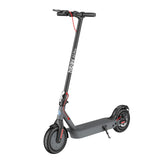
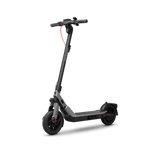
Yes, electric scooters are legal in Florida if they can't go faster than 20 mph on level ground. You need no driver license, registration or insurance, you follow bicycle rules, and riders under 16 must wear a helmet. E-bikes follow the same rules in three classes up to 28 mph, and cities can add rules on sidewalks, ages and photo ID.
We ship electric scooters and e-bikes to riders all over the country, and Florida is one of the states we're asked about most. Here are the state rules in plain terms, a short note on electric dirt bikes, and what Miami, Miami Beach, Orlando and Tampa publish. The official sources are listed at the end.
What are the Florida electric scooter and e-bike rules?
| Rule | Electric scooter | E-bike |
|---|---|---|
| Where the law is | Florida Statutes 316.003(48) and 316.2128 | Florida Statutes 316.003(23) and 316.20655 |
| Speed in the definition | Can't go faster than 20 mph on level ground | Motor stops helping at 20 mph (Class 1 and 2) or 28 mph (Class 3); motor under 750 W |
| Where to ride | Where bicycles ride; local rules can restrict streets and sidewalks | Where bicycles are allowed: streets, shoulders, bike lanes, bike paths and multiuse paths |
| Sidewalks | Bicycle rules apply: yield to pedestrians and give an audible signal before passing; local rules can restrict | Same as an electric scooter |
| Minimum age | None statewide; local governments can set one | None statewide; local governments can set one |
| Helmet | Required under 16 | Required under 16 |
| License, registration, insurance | Not needed | Not needed |
| Lights at night | White front lamp seen from 500 ft; red rear lamp and red reflector seen from 600 ft | Same as an electric scooter |
| Other | Local governments can require riders to carry photo ID | Class label required; the motor must cut out when you stop pedaling or brake |
Are electric scooters street legal in Florida?
Yes. Florida's definition covers any electric scooter with or without a seat, on three wheels or fewer, that can't go faster than 20 mph on level ground (an e-bike doesn't count). Electric scooters that fit it need no registration or insurance, and riders need no driver license.
On the road you have the same rights and duties as a person on a bicycle. That means riding in the bike lane, or as close as practicable to the right-hand curb or edge when you're slower than traffic (passing, turning left and avoiding hazards are the exceptions), obeying signals, and using lights at night.
What if your electric scooter goes faster than 20 mph?
Then it falls outside Florida's definition, so the license, registration and insurance exemptions don't cover it on public roads.
Many performance electric scooters, including models we sell, are built for well over 20 mph. Riders use them on private property and in places where local rules allow them. If you plan to ride on Florida streets, pick an electric scooter rated for 20 mph or less by its maker. See how fast electric scooters go, by type.
Can you ride an electric scooter on the sidewalk in Florida?
It depends on where you are. Florida law gives electric scooter and e-bike riders the rights and duties of a bicycle rider, and a bicycle rider on a sidewalk or crosswalk has the rights and duties of a pedestrian: you must yield to people walking and give an audible signal before you pass them.
Counties and cities can regulate or restrict sidewalk riding by ordinance, and any ordinance that allows electric scooters or e-bikes on sidewalks must cap them at 15 mph there. Some cities have banned sidewalk riding outright; Miami Beach is one (see below). Check your city's rules before you ride on the sidewalk.
What are the e-bike classes in Florida?
Florida defines an e-bike as a bicycle or tricycle with fully working pedals, a seat and an electric motor of less than 750 watts, in one of three classes:
- Class 1: the motor helps only while you pedal and stops helping at 20 mph.
- Class 2: the motor can move the e-bike on its own (a throttle) and stops helping at 20 mph.
- Class 3: the motor helps only while you pedal and stops helping at 28 mph.
Every e-bike must carry a permanent label showing its class, top assisted speed and motor wattage. Changing the motor's speed or engagement is illegal unless you replace the label to match.
The law also says the motor must stop when the rider stops pedaling or applies the brakes; on most e-bikes the brake cutoff switch in the lever does that job (see brake repair, what we check and what it costs).
Where can you ride an e-bike in Florida?
Where bicycles are allowed, including streets, highways, roadways, shoulders, bike lanes, bike paths and multiuse paths. Three groups can restrict that: local governments (streets and sidewalks), whoever manages a bike path, multiuse path or trail network, and whoever manages a beach or dune. E-bikes are exempt from the rules on licenses, registration, title, insurance and off-highway vehicles.
Do you need a helmet to ride an electric scooter in Florida?
Yes, if you're under 16. Florida requires bicycle riders and passengers under 16 to wear a properly fitted, fastened helmet that meets the federal bicycle helmet standard, and the law applies that rule to e-bike and electric scooter riders too. For adults a helmet is optional by law, and we recommend one on every ride: browse helmets and safety gear.
Is there an age limit for electric scooters and e-bikes in Florida?
Not statewide. Florida lets local governments set one or more minimum ages for electric scooters and e-bikes, and require riders to carry a government-issued photo ID while riding, so the answer can change at the city line. Rental programs usually set their own ages too; Tampa's shared program, for example, requires riders to be 16 or older with a driver license or permit.
What are the electric scooter rules in Miami, Orlando and Tampa?
These are the rules each city publishes. Posted signs in a park, on a trail or on a street can add more.
Miami and Miami Beach
The City of Miami's published electric scooter rules were written for its shared, rented electric scooter program, so for your own electric scooter the state rules and posted signs are the baseline.
Miami Beach, a separate city, is strict. It bans e-bikes, e-scooters and e-skateboards on the Beachwalk, city sidewalks, Collins Park, the Marina Baywalk south of 5th Street, the Promenade west of the Beachwalk from 24th to 29th Streets, and South Pointe Park. Motorized micromobility devices are also banned on the Baywalk, Lincoln Road and the Ocean Drive sidewalks from 5th to 15th Streets.
Orlando
The city allows stand-up electric scooters and bicycles on streets and sidewalks unless an area is posted otherwise. Seated electric scooters can use the streets, but not sidewalks unless they're governed so they can't exceed 10 mph.
The city also says it caps stand-up electric scooters at 10 mph, and asks riders to slow to 10 mph or less within 50 feet of pedestrians. Some city parks, including Lake Eola, don't allow electric scooters or bicycles.
Shared rentals have an extra no-ride zone on the Orange Avenue corridor downtown from 8 p.m. to 4 a.m. on Fridays, Saturdays and Sundays.
Tampa
Tampa's published rules cover its shared electric scooter and e-bike program. Riders must be 16 or older with a valid driver license or permit, and shared electric scooters and e-bikes may not be ridden on the Tampa Riverwalk, Bayshore Boulevard or 7th Avenue in Ybor City.
Helmets are encouraged; under state law they're required for anyone under 16. Wherever you ride, Florida's rule applies: yield to pedestrians and give an audible signal before you pass.
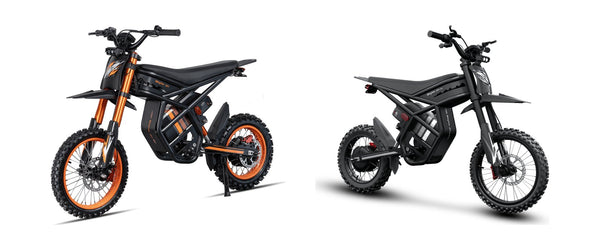
What about electric dirt bikes and e-motos in Florida?
A ride without working pedals, with a motor of 750 watts or more, or with assist past 28 mph is not an e-bike under Florida law, whatever the listing says; the specs decide, not the label.
A seated electric two-wheeler that isn't an e-bike and goes faster than 20 mph is usually treated as a motorcycle, which needs a title, registration, a plate and a motorcycle endorsement on the rider's license.
Florida law also says miniature motorcycles aren't legal on public roads, can't be registered, and can't be ridden on sidewalks unless a local ordinance allows it.
Most riders use electric dirt bikes on private land with the owner's permission or at off-road parks. Our guide to the best electric dirt bikes covers sizes for kids, teens and adults.
Which electric scooters fit Florida's rules?
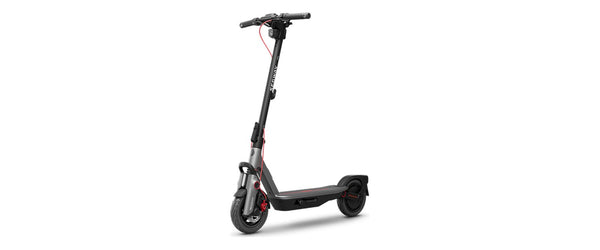
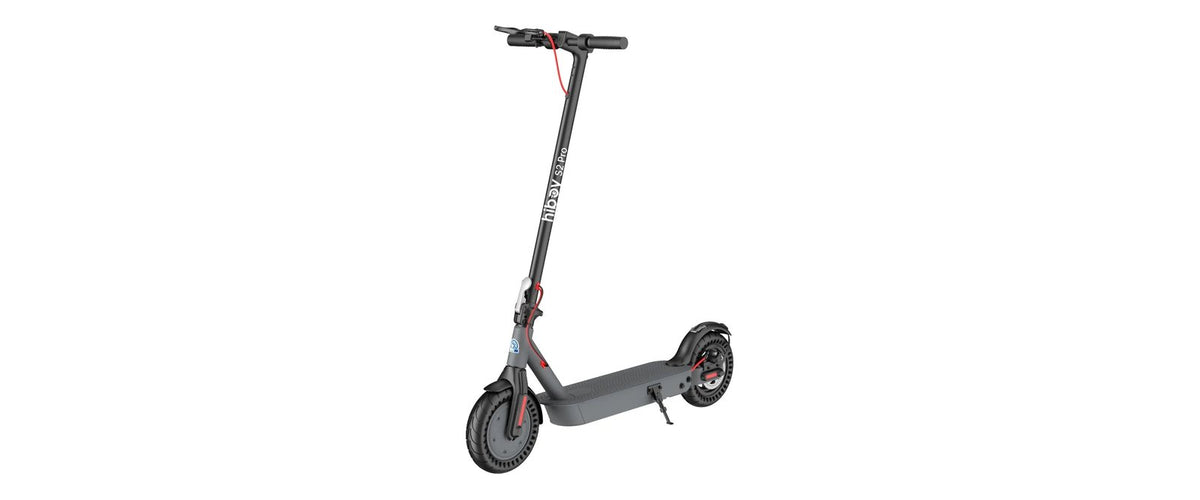
We ship nationwide, and standard shipping is free to the lower 48 states and Washington, D.C. (see our shipping policy). For Florida streets, these models in our range are built for 20 mph or less on the maker's own figures:
| Electric scooter | Top speed (maker's figure) | Good for |
|---|---|---|
| Segway E2 Pro | 18.6 mph | Daily commuting, 10-inch tubeless tires |
| Hiboy S2 Pro | 19 mph | Light commuting, up to 25 miles of range |
| Segway E3 Pro | 20 mph | Commuting with dual suspension |
| Segway F3 | 20 mph | Longer commutes, up to 44 miles of range |
For more choices, browse commuter electric scooters and electric scooters with a seat, and check each model's top speed against the 20 mph rule. For an e-bike, look for the Class 1, 2 or 3 label and a motor under 750 W, then browse electric bikes. Not sure which suits you? Read electric scooter vs e-bike.
Compare other states in our Texas electric scooter laws and NYC electric scooter laws guides, or see all our rules and laws guides.
Shop electric scooters at Wilson's, from light commuters to dual-motor models.
Frequently asked questions
Do you need a license to ride an electric scooter in Florida?
No. An electric scooter that can't go faster than 20 mph on level ground needs no driver license, registration or insurance. Some local governments require riders to carry a photo ID, and Tampa's rental program requires a driver license or permit.
How fast can an electric scooter go in Florida?
To count as an electric scooter under Florida law it must not be able to go faster than 20 mph on level ground. Where a local ordinance allows sidewalk riding, the limit on the sidewalk is 15 mph or lower.
Do you have to wear a helmet on an electric scooter in Florida?
Riders under 16 must wear a helmet that meets the federal bicycle helmet standard. Adults aren't required to, but it's the best protection you can buy.
Can you ride an electric scooter on the sidewalk in Florida?
Often yes, as long as you yield to pedestrians and give an audible signal before passing, but cities and counties can restrict it. Miami Beach bans e-scooters on city sidewalks, and Orlando keeps seated models off sidewalks unless they're governed to 10 mph.
Can you ride an e-bike on the beach in Florida?
Only where the managing city, county or state agency allows it. Florida law lets whoever has jurisdiction over a beach or dune restrict or ban e-bikes there.
Are e-bikes allowed on Florida bike paths and trails?
Yes, by default, wherever bicycles are allowed, but the agency that manages a bike path, multiuse path or trail network can restrict or ban them.
Sources: Florida Statutes 316.003 (definitions); 316.2128 (e-scooters and micromobility devices); 316.20655 (electric bicycles); 316.2065 (bicycle regulations); 316.008 (local powers); City of Miami Beach; City of Orlando; City of Tampa. Checked October 2026.
This guide is general information, not legal advice. Laws change and cities add their own rules, so check your city's current rules before you ride.