Yes, electric scooters are legal on California streets: you need a driver's license or instruction permit, you may not ride faster than 15 mph, you stay off the sidewalk, and riders under 18 must wear a helmet. E-bikes come in three classes up to 28 mph and need no license, registration or insurance. Electric dirt bikes such as Surron and Talaria models aren't e-bikes: they are off-highway motorcycles. From January 1, 2027, a new law, SB 1167, tightens what can be sold as an e-bike.
We ship electric scooters and e-bikes to riders all over the country, and California is one of the states we hear from most; we also run a shop in San Francisco. Here are the state rules in plain terms, what changed in 2026, and which electric scooters fit. The official sources are listed at the end.
What are the California electric scooter and e-bike rules?
| Rule | Electric scooter | E-bike |
|---|---|---|
| Where the law is | Vehicle Code §407.5 (definition), §§21220–21235 and §22411 | Vehicle Code §312.5 (definition and classes), §§21200–21214.7 and §24016 |
| What counts | Two wheels, handlebars, an electric motor, and a standing deck or a seat and footrests | Fully working pedals and a motor of 750 watts or less, in Class 1, 2 or 3 |
| Speed | 15 mph maximum on every road and bikeway, whatever the posted limit | Motor stops helping at 20 mph (Class 1 and 2) or 28 mph (Class 3) |
| Driver's license | Driver's license or instruction permit required | Not required |
| Registration and insurance | Not required | Not required |
| Minimum age | No set age, but the license or permit rule applies | 16 for Class 3; none set for Class 1 and 2 |
| Helmet | Required under 18 | Required under 18, and for every rider on a Class 3 e-bike |
| Sidewalks | Not allowed, except to enter or leave a property | Set by each city or county |
| Bike lanes and paths | Allowed unless a local ordinance bans them | Allowed; trail managers and State Parks can ban e-bikes on trails |
| Busy roads | Not on roads over 25 mph unless in a bike lane (cities can allow up to 35 mph) | Bicycle rules apply |
| Lights | At night: white front light seen from 300 ft, red rear reflector seen from 500 ft, side reflectors | At night: same as a bicycle; a red rear reflector or light at all hours since 2026 |
| Passengers | Not allowed | Bicycle rules apply |
Do you need a license to ride an electric scooter in California?
Yes. California requires a valid driver's license or instruction permit to ride an electric scooter on public roads (Vehicle Code §21235(d)). You don't need to register it, put a plate on it or insure it (§21224), and the definition covers seated electric scooters as well as stand-up ones (§407.5).
One thing worth knowing: the law requires electric scooter makers to warn buyers that their existing insurance policies may not cover electric scooter accidents (§407.5(c)). If that matters to you, ask your insurer before you ride.
How fast can you ride an electric scooter in California?
15 mph. No one may ride an electric scooter faster than 15 mph (§22411), and that limit applies on every road and bikeway, even where the posted limit is higher (§21235(b)).
The same rule keeps you off busier streets: you can't ride on a road with a speed limit over 25 mph unless you're in a Class II or Class IV bikeway (a bike lane or a separated bikeway). A city or county can allow electric scooters outside a bikeway on roads up to 35 mph by ordinance.
California limits how fast you ride, not how fast the electric scooter can go. A model built for 30 or 40 mph still keeps to 15 mph on public roads, so for California streets you're paying for range, brakes, tires and comfort rather than top speed. See how fast electric scooters go, by type.
Can you ride an electric scooter on the sidewalk in California?
No, except as needed to get into or out of a property next to the sidewalk (§21235(g)). You also can't leave one lying on a sidewalk, or parked so it blocks the path for people walking (§21235(i)).
Bike paths, trails and bikeways are open to electric scooters unless the local authority bans them by ordinance (§21230), and cities and counties can regulate parking and riding on their own streets and paths (§21225). Shared rental programs add their own rules on top.
Do you need a helmet on an electric scooter or e-bike in California?
On an electric scooter, if you're under 18 (§21235(c)). The helmet must be a properly fitted and fastened bicycle helmet that meets the ASTM or CPSC standard.
On an e-bike, riders under 18 must wear one, because e-bike riders follow the bicycle rules (§312.5(b) and §21212), and every rider on a Class 3 e-bike must wear one, at any age (§21213(b)). For adults on an electric scooter or a Class 1 or 2 e-bike, a helmet is optional by law, and we recommend one on every ride: browse helmets and safety gear.
What are the e-bike classes in California?
An e-bike in California has fully working pedals and an electric motor of no more than 750 watts (§312.5(a)), in one of three classes:
- Class 1: the motor helps only while you pedal and stops helping at 20 mph.
- Class 2: the motor can move the e-bike on its own (a throttle) and stops helping at 20 mph.
- Class 3: the motor helps only while you pedal and stops helping at 28 mph, and the e-bike has a speedometer. Riders must be 16 or older and wear a helmet (§21213).
Every e-bike must carry a permanent label with its class, top assisted speed and motor wattage (§312.5(c)). The motor must cut out when you brake (§24016(a)(2)); on most e-bikes the brake cutoff switch in the lever does that job (see brake repair, what we check and what it costs).
Changing an e-bike's speed capability is illegal unless it still meets the definition and the label is replaced to match, and since January 1, 2026 it is also illegal to sell a product or app that pushes an e-bike past the definition (§24016(d) and (e)).
E-bikes need no driver's license, registration, plate or insurance, and an e-bike is not a motor vehicle (§24016(b)). Also new for 2026: an e-bike must show a red rear reflector or a red rear light at all hours, not only at night (§21201(f)).
Where can you ride an e-bike in California?
Wherever bicycles can go, with three limits. A city or county can regulate riding on its sidewalks and bicycle facilities (§21206). Whoever manages an equestrian, hiking or recreational trail can ban e-bikes, or one class of e-bike, there. And California State Parks can ban e-bikes on bike paths and trails it manages (§21207.5). Check the signs at the trailhead.
What changed in California in 2026?
- SB 586 (in force January 1, 2026) created a new category, the "off-highway electric motorcycle" or eMoto: an electric two-wheeler designed mainly for off-highway use, with a straddle seat and no pedals from the maker (§436.1). These are off-highway motor vehicles and qualify for the California Green Sticker.
- SB 1271 (in force since January 1, 2025) made it illegal to advertise, sell or label as an "electric bicycle" any vehicle the maker intends to be modifiable past 20 mph on motor power alone or past 750 watts, or one modified that way or with its pedals removed (§312.5(d)).
- AB 544 and AB 545 (January 1, 2026) added the all-hours rear reflector or light for e-bikes and the ban on selling speed-unlocking products.
-
SB 1167, signed September 30, 2026 (Chapter 846, Statutes of 2026). Under California's constitution a new law from the regular session takes effect on January 1 of the next year, so most of it starts on January 1, 2027; some battery rules start in 2028. It:
- says a vehicle can't be sold, advertised or labeled as an e-bike if it has more than 750 watts, can go faster than 20 mph on motor power alone, gives assist past 28 mph, or has no working pedals;
- adds the brand name and the maker, importer or distributor to the required e-bike label, and lets class labels be sold and fitted only at a physical retailer or bicycle repair shop that checks the class first;
- bans riding a two- or three-wheeled electric device that can go faster than 20 mph on motor power alone on a road or public right-of-way, unless the Vehicle Code defines and allows that type of vehicle there;
- renames the "motorized bicycle" a moped, with a new definition for road-legal mopeds and electric motor-driven cycles.
If you already ride a Class 1, 2 or 3 e-bike with its label, nothing about how you ride changes. The changes hit what can be sold and labeled as an e-bike, and fast electric two-wheelers that don't fit any category.
Are Surron and Talaria electric dirt bikes street legal in California?
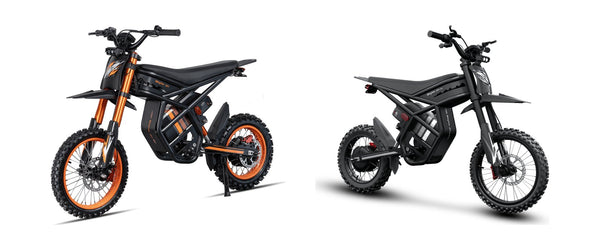
No. California State Parks names Sur-Ron and Talaria among the makers of off-highway electric motorcycles, and says these models are not e-bikes or mopeds under the Vehicle Code. Labeling them as e-bikes is now a crime in California, so we call them electric dirt bikes, never e-bikes.
Because they are built for off-highway use, they can't be converted for road registration. Riding one on a street can bring a citation for an unregistered vehicle and for riding without a motorcycle license, and riding on public off-highway land needs a California Green Sticker (or Red Sticker). Private land with the owner's permission and State Vehicular Recreation Areas are where most riders go.
See our electric dirt bikes and our guide to the best electric dirt bikes, with sizes for kids, teens and adults.
Which electric scooters fit California's rules?
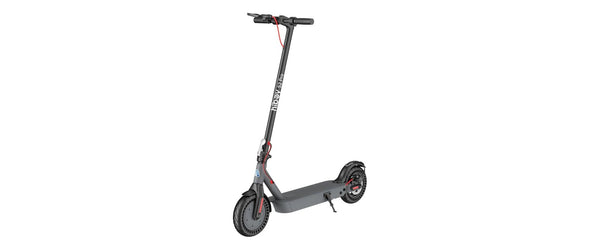
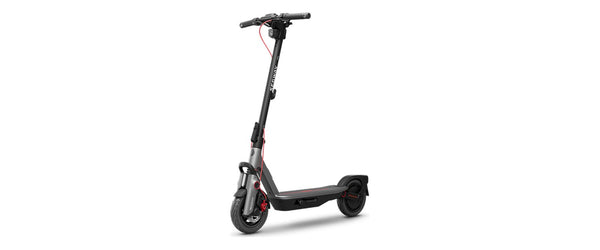
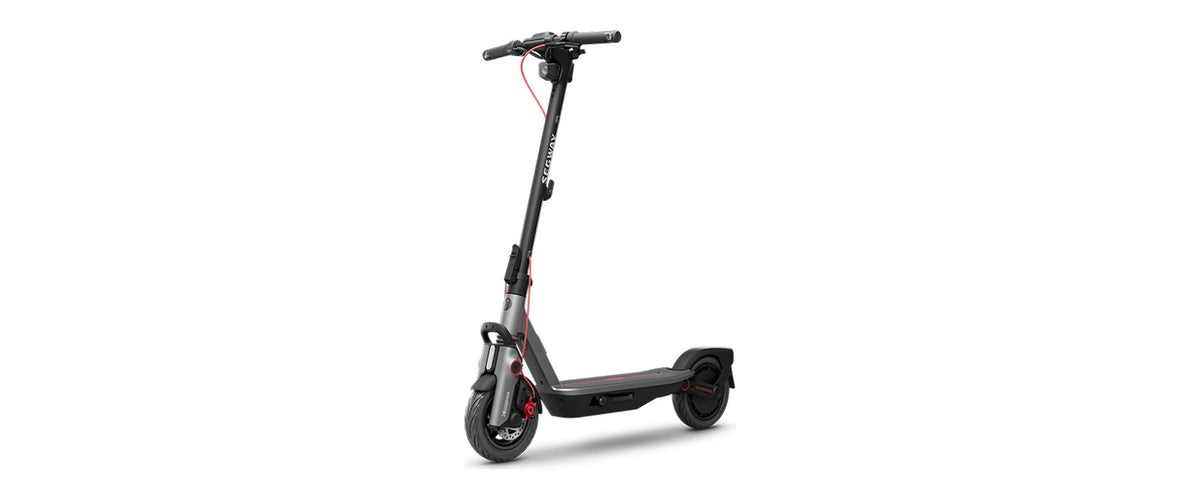
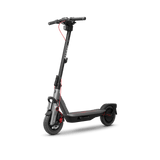
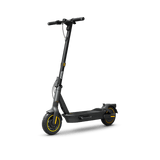
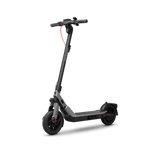
Any electric scooter can be ridden legally in California at 15 mph or less with a license or permit, so choose for range, hills and weather rather than top speed. We ship nationwide, and standard shipping is free to the lower 48 states and Washington, D.C. (see our shipping policy). These models in our range suit California commuting on the maker's own figures:
| Electric scooter | Top speed (maker) | Range (maker) | Good for |
|---|---|---|---|
| Segway F3 | 20 mph | Up to 44 miles (Eco) | Longer commutes; IPX6 for wet days |
| Segway Max G2 | 22 mph | Up to 43 miles | Range and hills, IPX5 |
| Segway E3 Pro | 20 mph | Up to 34 miles | Daily commuting with suspension, IPX5 |
| Segway E2 Pro | 18.6 mph | Up to 21.7 miles | Shorter trips, 10-inch tubeless tires |
Whatever the top speed, keep it to 15 mph on public roads. For more choices, browse commuter electric scooters and long-range electric scooters. For an e-bike, look for the Class 1, 2 or 3 label and a motor of 750 watts or less, then browse electric bikes. City guides: electric scooters for Los Angeles and electric scooters for San Francisco.
Where can you get an electric scooter serviced in California?
At our San Francisco shop, 360 11th St in SoMa: Monday to Saturday, 10 AM to 7 PM from March through November and 9 AM to 6 PM from December through February, closed Sundays. Walk-ins are welcome, and our technicians service every brand, wherever you bought it.
A simple inspection is always free; a full diagnosis with disassembly or test equipment is $30, waived on repairs over $100. Brake repair starts at $25, a flat tire repair at $40 and a tune-up and safety check at $50, parts and labor included. See the San Francisco repair shop or book a repair.
Compare other states in our Florida, Texas and New Jersey guides, or see all our state law guides.
Shop electric scooters at Wilson's, from light commuters to long-range models.
Frequently asked questions
Do you need a license to ride an electric scooter in California?
Yes, a valid driver's license or instruction permit (Vehicle Code §21235). You don't need registration, a plate or insurance.
How fast can an electric scooter go in California?
You may not ride one faster than 15 mph on any road or bikeway, whatever the posted limit or the electric scooter's design speed (§22411).
Do adults have to wear a helmet on an electric scooter in California?
No. The helmet rule covers riders under 18 on electric scooters. On e-bikes, it covers riders under 18 and every Class 3 rider.
Can you ride an electric scooter on the sidewalk in California?
No, only to get into or out of a property next to it. Use the street, a bike lane or a bike path instead.
Do you need a license for an e-bike in California?
No. A Class 1, 2 or 3 e-bike needs no driver's license, registration, plate or insurance. Class 3 riders must be 16 or older.
What does SB 1167 change for e-bikes?
From January 1, 2027, a vehicle with more than 750 watts, more than 20 mph on motor power alone, assist past 28 mph or no working pedals can't be sold or labeled as an e-bike, labels must name the brand and maker, and fast electric devices that fit no legal category are banned from public roads.
Sources: California Vehicle Code on leginfo.legislature.ca.gov: §§312.5, 407.5, 436.1, 21201, 21206, 21207.5, 21212, 21213, 21223, 21224, 21225, 21230, 21235, 22411 and 24016; SB 1167 (Chapter 846, Statutes of 2026); California Constitution, Article IV, Section 8(c); California State Parks OHMVR Division, OHV Information Bulletin 25-1 (December 8, 2025). Checked October 2026.
This guide is general information, not legal advice. Laws change and cities add their own rules, so check your city's current rules before you ride.