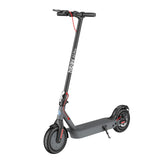
Yes, electric scooters are legal in Texas. You can ride one on streets posted at 35 mph or less, on bike paths and on sidewalks, with no license, registration or insurance, though cities and counties can ban them from streets or sidewalks for safety. E-bikes follow bicycle rules in three classes up to 28 mph, Class 3 riders must be at least 15, and there's no statewide helmet law.
Riders across the country ask us what the rules are where they live, so here is Texas in plain terms: the state rules for electric scooters and e-bikes, a short note on electric dirt bikes, and the published rules in Austin, Dallas, Houston and San Antonio. The official sources are listed at the end.
What are the Texas electric scooter and e-bike rules?
| Rule | Electric scooter | E-bike |
|---|---|---|
| Where the law is | Transportation Code 551.351 to 551.353 | Transportation Code 551.106, 551.107 and Chapter 664 |
| Top speed in the definition | None set. The limit is on where you ride | Motor stops helping at 20 mph (Class 1 and 2) or under 28 mph (Class 3); motor under 750 W |
| Streets | Posted 35 mph or less; you may cross faster roads at an intersection | Yes, including highways used mainly by cars, which can't ban them |
| Bike lanes and paths | Yes | Yes; natural-surface trails can ban them |
| Sidewalks | Yes, unless the city or county bans it | Yes, unless the state or the city bans bicycles there |
| Minimum age | None statewide | 15 for Class 3; none for Class 1 and 2 |
| Helmet | No state law; some cities require one for minors | No state law; some cities require one for minors |
| License, registration, insurance | Not needed | Not needed |
| Lights at night | White front lamp seen from 500 ft; red rear reflector or lamp | Same as an electric scooter |
| Brakes | A brake that can skid the wheel on dry pavement | Same, and the motor must cut out when you stop pedaling or brake |
Are electric scooters street legal in Texas?
Yes. Texas covers electric scooters in Transportation Code sections 551.351 to 551.353. To qualify, the device needs at least two wheels on the ground, a braking system that can stop it, a deck you stand or sit on, a motor, and it must be possible to move it by human power alone.
Unlike Florida or New York, Texas sets no top speed in that definition. Its only size limit, 40 cubic centimeters, is written for gas engines.
The rules that apply to motor vehicles don't apply to an electric scooter that fits this definition, which is why you need no driver license, plate, registration or insurance to ride one. Unless the law says otherwise, the bicycle rules apply instead.
Where can you ride an electric scooter in Texas?
- Streets: only where the posted speed limit is 35 mph or less. You can cross a faster road at an intersection.
- Bike lanes and bike paths: yes.
- Sidewalks: yes under state law, but a county or city can ban electric scooters from a street, highway or sidewalk if it decides that's needed for safety, and the state can ban them from a highway. Dallas and San Antonio both restrict sidewalk riding (see the city rules below).
Texas doesn't cap an electric scooter's top speed, but the 35 mph street rule still shapes what makes sense to buy. A commuter model is built for exactly the streets and bike lanes the law opens to you.
What are the e-bike classes in Texas?
Texas defines an e-bike as a bicycle with fully working pedals, an electric motor of less than 750 watts and a top assisted speed of 28 mph or less. It must fit one of three classes:
- Class 1: the motor helps only while you pedal, up to 20 mph.
- Class 2: the motor can move the e-bike without pedaling (a throttle), up to 20 mph.
- Class 3: the motor helps only while you pedal, above 20 mph but under 28 mph. Riders must be at least 15; younger riders can still ride along as a passenger.
Every e-bike sold in Texas must carry a permanent label showing its class, top assisted speed and motor wattage, and anyone who changes the motor's speed or engagement has to replace that label. The motor must also stop when you stop pedaling or when you apply the brakes.
On most e-bikes that job falls to the brake cutoff switch, a small sensor in the lever; if yours has stopped working, see brake repair, what we check and what it costs.
A legal e-bike is not a motor vehicle in Texas, so it needs no title, registration, driver license or insurance.
Where can you ride an e-bike in Texas?
Almost anywhere a regular bicycle can go. The state and local authorities can't ban e-bikes from highways used mainly by motor vehicles, or from places where non-electric bicycles are allowed. The one exception is a path closed to motor vehicles with a natural surface, made by clearing and grading the native soil; managers of those trails can keep e-bikes off.
The state or a city can ban bicycles, including e-bikes, from sidewalks, and can set speed limits on bike paths.
Do you need a helmet to ride an electric scooter in Texas?
Not under state law: Texas has no statewide helmet requirement for electric scooter or e-bike riders. Some cities set their own. Austin requires a helmet for riders under 18, and Dallas requires minors to wear one on an electric scooter. We recommend a helmet for every rider, every ride; browse helmets and safety gear.
What are the electric scooter rules in Austin, Dallas, Houston and San Antonio?
Texas lets cities and counties add their own rules, and the four biggest cities all have. These are the rules each city publishes; signs on a street, trail or park can add more.
Austin
The city says riding an electric scooter or other micromobility device on a sidewalk is allowed if you do it safely and respectfully. Yield to people walking, people on bicycles and people with disabilities, and ride sober. Helmets are required for riders under 18. Some park areas and trails don't allow electric scooters, while e-bikes are allowed on Austin's paved urban trails.
Dallas
Downtown Dallas has a sidewalk riding prohibition area: inside it, bicycles and electric scooters can't be ridden on the sidewalk. City code requires minors to wear a helmet on an electric scooter.
Rented, dockless electric scooters and e-bikes have extra rules: no riding on sidewalks (except to start or end a ride), trails, parks, plazas or roads posted at 35 mph or higher, a citywide 20 mph limit, no rentals to anyone under 16, and all rides ending by 9 p.m.
Houston
Since November 19, 2025, Houston has banned riding electric scooters and similar micromobility devices within city limits between 8 p.m. and 4 a.m. The city says personal electric scooters are covered, not just rentals, with exceptions that include riding directly to or from school or work and emergencies. The city's announcement says e-bikes are not included. Breaking the ordinance can mean a fine of up to $500.
San Antonio
The city's electric scooter riding tips say riding an electric scooter on the sidewalk is prohibited, riders must be 16 or older, and bike lanes must be used where they exist. Separately, the city's laws page says City Code section 19-286 doesn't allow bicycles to be ridden on sidewalks, and Texas law treats an e-bike as a bicycle, so plan on the street or bike lane there too.
What about electric dirt bikes and e-motos in Texas?
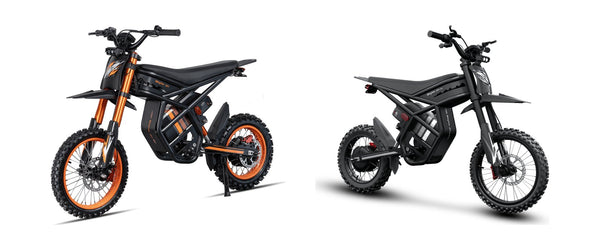
A ride with no working pedals, a motor of 750 watts or more, or assist past 28 mph is not an e-bike under Texas law, whatever the listing says. We regularly meet riders who bought a fast seated model sold online as an "e-bike"; under the law, the specs decide, not the label.
Small seated minimotorbikes that aren't built for the road and can't be titled can't be ridden on any road, bike path or sidewalk. A full-size electric motorcycle needs the same paperwork as any motorcycle: title, registration, insurance and a Class M license.
In practice, riders use electric dirt bikes on private land with the owner's permission or at off-road parks. Our guide to the best electric dirt bikes covers sizes for kids, teens and adults.
Which electric scooters and e-bikes fit Texas rules?
We ship nationwide, and standard shipping is free to the lower 48 states and Washington, D.C. (see our shipping policy). Wilson's sells models that suit each state's rules, and Texas is one of the more open states:
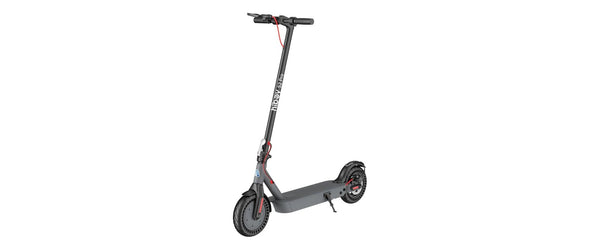
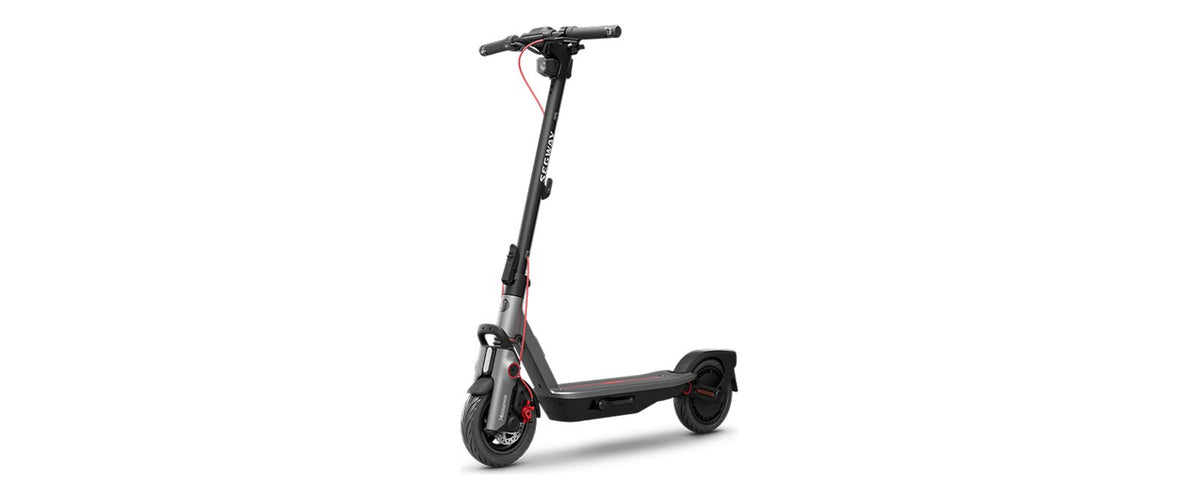
- For streets and bike lanes: a commuter electric scooter. The Segway F3 shown above (up to 20 mph and 44 miles on Segway's figures) and the lighter Hiboy S2 Pro (19 mph on Hiboy's figures) suit Texas streets and stricter states alike.
- For speed: Texas sets no top speed for electric scooters, but the 35 mph street rule and your city's rules still apply. See how fast electric scooters go, by type.
- For e-bikes: look for the Class 1, 2 or 3 label and a motor under 750 W, then browse electric bikes or commuter e-bikes. Not sure which to choose? Read electric scooter vs e-bike.
If you're in New York or California, compare the rules in our guides to NYC electric scooter laws and electric scooters in Los Angeles, or see all our rules and laws guides.
Shop electric scooters at Wilson's, from light commuters to dual-motor models.
Frequently asked questions
Do you need a license to ride an electric scooter in Texas?
No. An electric scooter that fits the Texas definition needs no driver license, registration or insurance, because the motor vehicle rules don't apply to it.
Can you ride an electric scooter on the road in Texas?
Yes, on streets with a posted speed limit of 35 mph or less. You can cross a faster road at an intersection, and a city can ban electric scooters from specific streets for safety.
Can you ride an electric scooter on the sidewalk in Texas?
State law allows it, but cities can ban it. Downtown Dallas has a sidewalk riding prohibition area, San Antonio's electric scooter rules prohibit sidewalk riding, and Austin allows it if you ride safely and yield to people walking.
How old do you have to be to ride an e-bike in Texas?
There's no statewide minimum age for Class 1 and Class 2 e-bikes. You must be at least 15 to ride a Class 3 e-bike.
Can you ride an electric scooter at night in Texas?
Yes, with lights: a white front lamp visible from at least 500 feet and a red rear reflector or red rear lamp. In Houston, riding an electric scooter between 8 p.m. and 4 a.m. is banned, with limited exceptions.
Are e-bikes allowed on Texas trails?
Yes, anywhere regular bicycles are allowed, except paths closed to motor vehicles with a natural soil surface, where the trail manager can ban them.
Sources: Texas Transportation Code, Chapter 551; Chapter 664 (electric bicycles); Section 541.201 (definitions); City of Austin, Shared Mobility; City of Dallas, Dockless Vehicle Program; City of Houston, e-scooter curfew; City of San Antonio, Laws and Ordinances. Checked October 2026.
This guide is general information, not legal advice. Laws change and cities add their own rules, so check your city's current rules before you ride.