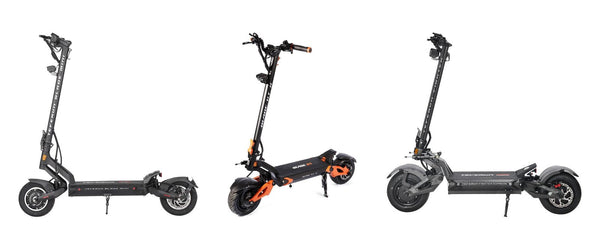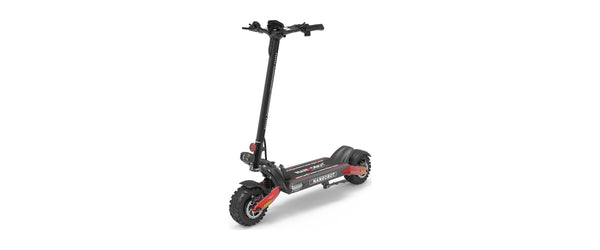

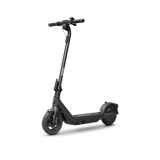
Most commuter electric scooters are designed for 15 to 20 mph. Kids' models stay around 10 mph, performance models reach 30 to 50 mph, and the fastest dual-motor flagships list 60 mph and more. In New York City, a street-legal electric scooter is designed for 20 mph or less and weighs under 100 lb, and you ride at 15 mph or less (see are electric scooters legal in NYC?). Here is how fast each type goes, from the makers' own figures, and what decides an electric scooter's top speed.
- Kids' electric scooters: about 8 to 12 mph
- Commuter electric scooters: 15 to 20 mph
- Mid-range: 20 to 30 mph
- Performance: 30 to 50 mph
- Flagships: 50 to 60 mph and up
- New York City: designed for 20 mph or less, ridden at 15 mph or less
Top speed by type of electric scooter
| Type | Top speed (maker's figure) | Examples from our range |
|---|---|---|
| Kids | About 8 to 12 mph | Segway C2 Lite 9.9 mph, Segway C2 Pro 12.4 mph |
| Commuter | 15 to 20 mph | Segway E2 Pro 18.6 mph, Segway F3 20 mph |
| Mid-range | 20 to 30 mph | KuKirin G2 27 mph, Joyor S5-Z 28 mph |
| Performance | 30 to 50 mph | Segway GT3 31 mph, Hiboy Titan Pro 33 mph, Teverun Fighter Mini Pro 40 mph, YUME Hawk 43 mph |
| Flagship | 50 to 60 mph and up | KuKirin G4 Max 53 mph, Teewing Z4 Pro 55 mph, Kaabo King GTR 65 mph |
Top speeds are the makers' published figures from our product pages. Models over 20 mph or 100 lb aren't sold or shipped to New York City addresses.
What decides an electric scooter's top speed
Three things set the number on the spec sheet:
- Motor power. Commuter models typically run a single rated motor of about 300 to 500 watts. Performance models step up to 1,000 watts or more, often with a motor in each wheel. The rated figure is the one to compare; peak figures only last a few seconds.
- Battery voltage. Higher-voltage systems, 48V, 60V or 72V, are what let the fastest models hold speed, which is why flagships carry larger, heavier packs.
- Speed modes. Most electric scooters have two or three modes. The maker's top speed is the fastest one; slower modes trade speed for range and control.
The figure is measured in good conditions: a lighter rider, flat ground, a full battery and mild weather. A heavier rider, a hill, a headwind or a low battery all bring real-world speed below it. That is normal, not a fault.
How fast can you ride an electric scooter in New York City?
New York State only treats a device as an electric scooter if it is designed for 20 mph or less and weighs under 100 lb. In New York City you ride at 15 mph or less, in bike lanes or on streets with a speed limit of 30 mph or less, never on the sidewalk, and you must be 16 or older. A lower speed mode doesn't change the rule: the definition is about the top speed the machine is built for. Full details and sources are in are electric scooters legal in NYC?.
Models over 20 mph or 100 lb aren't sold or shipped to New York City addresses. They are built for private land and places whose rules allow them.
Texas sets no top speed for electric scooters but limits them to streets posted at 35 mph or less: Texas electric scooter laws. Florida's limit is 20 mph by definition: Florida electric scooter laws.
Faster isn't always better for a commute
More speed usually means a bigger motor and battery, so more weight. The Segway F3 is designed for 20 mph at about 42 lb; the dual-motor flagships that pass 50 mph weigh well over 100 lb. If you carry your electric scooter up stairs or onto a train, weight matters more than top speed. See the best commuter electric scooters for NYC and the lightest electric scooters.
The fastest electric scooters we sell
At the top end, the Teverun Fighter Supreme 7260R is rated for 74 mph, the fastest electric scooter we sell. Next come the GSPACE Mars 11 GTR at 69 mph and the INMOTION RS at 68 mph. Every model rated at 50 mph and up is ranked in the fastest electric scooters of 2026. For everyday performance riding, see fast electric scooters and high-performance electric scooters.
When an electric scooter feels slow: what our technicians check
If an electric scooter no longer reaches its usual speed, our technicians check the battery under load first, then the controller, the motor and its sensors, the throttle, and anything that adds drag, like a rubbing brake or worn bearings. A simple inspection is always free, and we tell you what we found before any work starts. Controller replacement starts from $35 and motor repair from $100, parts and labor included. See electric scooter repair and our NYC repair price guide.
Frequently asked questions
How fast does an electric scooter go?
Most commuter electric scooters are designed for 15 to 20 mph. Performance models reach 30 to 50 mph, and the fastest flagships list 60 mph and more. These are the makers' figures, measured in good conditions.
How fast does a 500W electric scooter go?
Electric scooters with a rated motor of about 300 to 500 watts are usually designed for 15 to 20 mph. Top speed also depends on battery voltage and the maker's speed modes, so check each model's own figure.
Are 30 mph electric scooters legal in NYC?
No. New York only treats a device as an electric scooter if it is designed for 20 mph or less and weighs under 100 lb. Models over that aren't sold or shipped to New York City addresses.
Is top speed the same as cruising speed?
No. Top speed is the fastest mode in good conditions. In the city you ride at 15 mph or less, and most riders cruise below their electric scooter's top speed to save range.
Do electric scooters slow down on hills?
Yes. Climbing takes more power, so speed drops on a hill, more with a heavier rider or a low battery. Dual-motor models hold speed better on climbs.
How fast is the fastest electric scooter you sell?
By the makers' figures, the Teverun Fighter Supreme 7260R, rated for up to 74 mph. The GSPACE Mars 11 GTR (69 mph) and the INMOTION RS (68 mph) come next. See the fastest electric scooters of 2026 for the full ranking.
Speeds and motor figures are the makers' own, from our product pages, checked October 2026. New York rules: see the sources in are electric scooters legal in NYC?. General information, not legal advice.