


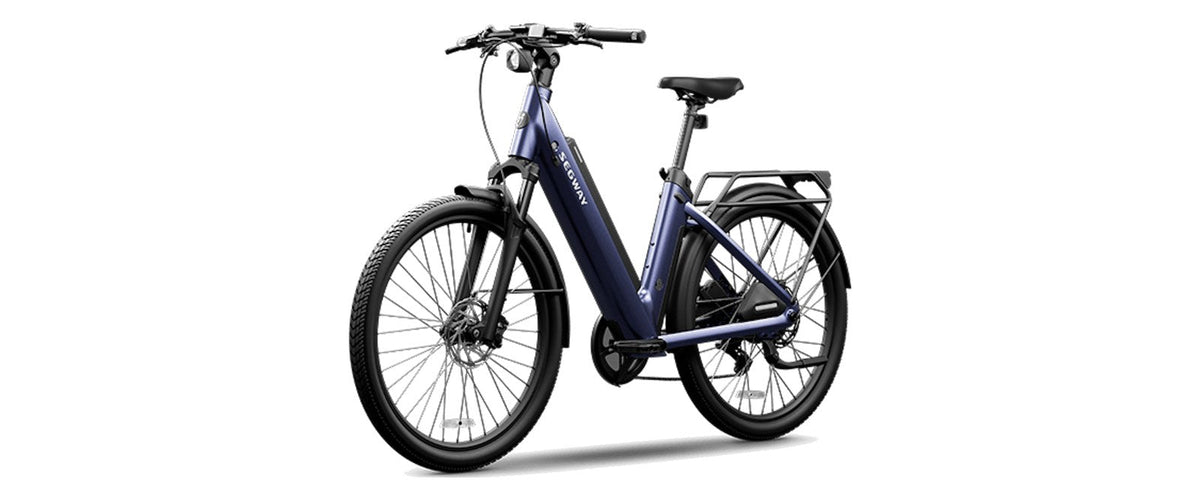


No. Stand-up electric scooters aren't legal on Pennsylvania's public roads, sidewalks or bike lanes in 2026, because the state Vehicle Code doesn't define them, and PennDOT says they can't be titled, registered or ridden there; private property with the owner's permission is the legal place to ride one. E-bikes are legal: Pennsylvania calls them pedalcycles with electric assist, and they need no license, registration or insurance if they weigh 100 lb or less, have a motor of 750 watts or less and reach no more than 20 mph on motor power alone. Riders must be 16 or older.
We ship electric scooters and e-bikes all over the country, including to Pennsylvania, so here are the state's rules in plain terms: what PennDOT says, what Philadelphia and Pittsburgh add, and which of our e-bikes fit the definition. The official sources are listed at the end.
What are the Pennsylvania electric scooter and e-bike rules?
| Rule | Electric scooter | E-bike |
|---|---|---|
| Where the law is | Not defined in the Pennsylvania Vehicle Code (75 Pa.C.S.) | 75 Pa.C.S. §102 ("pedalcycle with electric assist") and the pedalcycle rules, §§3501–3514 |
| What counts | A two-wheeled device with an electric motor and no seat (PennDOT) | 100 lb or less, two or three wheels over 11 inches, working pedals, motor rated 750 W or less, 20 mph or less on motor power alone |
| Public roads | Not allowed | Allowed, except freeways |
| Sidewalks | Not allowed | Not in business districts; cities can be stricter |
| Bike lanes | Not allowed | Allowed |
| License, registration, insurance | Can't be titled or registered | Not required |
| Minimum age | Not applicable on public roads | 16 |
| Helmet | Not applicable on public roads | Required under 12 (passengers, in practice) |
| Lights at night | Not applicable on public roads | White front lamp seen from 500 ft, red rear reflector, amber side reflectors |
| State park and forest trails | Not allowed | Allowed on trails open to bicycles unless posted; motor help up to 20 mph |
Why aren't electric scooters legal in Pennsylvania?
Because no Pennsylvania law creates a category for them. PennDOT's August 2026 micromobility information sheet lists the electric scooter as "not specifically classified or defined" in the Vehicle Code, and says that devices the law doesn't define may not be ridden on highways, a term that includes sidewalks, bike lanes and roads.
PennDOT's fact sheet on mopeds and motorcycles puts it directly: a two-wheeled vehicle powered by an electric motor, without a seat, can't be titled or registered in Pennsylvania and can't be ridden on its roads or sidewalks. So in Pennsylvania today, a stand-up electric scooter is legal to own and to ride on private property with the owner's permission, and nowhere public.
Bills to create a legal category for electric scooters have been introduced in Harrisburg, but none had become law as of October 2026. We'll update this guide if one does.
What about Pittsburgh and Philadelphia?
Pittsburgh ran a shared electric scooter pilot from July 2021 to July 2023. The city says the pilot has ended, so rental electric scooters aren't on Pittsburgh streets in 2026, and the pilot never covered privately owned electric scooters. Pittsburgh's POGOH bike share has included e-bikes since 2022.
Philadelphia has no electric scooter share. Its code lets the city license shared "small vehicles", including electric scooters, only after it adopts regulations, and it hasn't. The Indego bike share includes pedal-assist e-bikes. Philadelphia is also stricter than the state on sidewalks: no one may ride a bicycle, and that includes an e-bike, on a sidewalk, except children under 12 outside business districts and where city signs allow shared use (Philadelphia Code §12-808).
Is a seated electric scooter or moped legal in Pennsylvania?
Only if it is built and registered as a road vehicle. PennDOT sorts faster two-wheelers into three groups:
- Motorized pedalcycle (moped): working pedals, an automatic transmission and a top design speed of no more than 25 mph. It needs a moped plate, insurance and a Class C driver's license, and riders must be 16 or older.
- Motor-driven cycle: a motorcycle with a motor of no more than 5 brake horsepower, including a seated, moped-style electric scooter. It needs registration, inspection, insurance and a motorcycle license (or a Class C license in some cases), and a helmet under 21.
- Motorcycle: anything bigger, with a Class M license, registration, insurance and inspection.
PennDOT also says a seated electric scooter without the federal safety certification label isn't meant for highways, and since May 2026 PennDOT examines title applications for imported two-wheelers to check that the vehicle identification number shows an on-road vehicle.
What does Pennsylvania count as an e-bike?
A "pedalcycle with electric assist" (75 Pa.C.S. §102): a vehicle weighing not more than 100 pounds, with two or three wheels more than 11 inches in diameter, working pedals, an electric motor rated at not more than 750 watts, and capable of no more than 20 mph on a level surface on motor power alone. The law treats it as a bicycle.
Pennsylvania doesn't use the Class 1, 2 and 3 labels most states do. DCNR says plainly that the Vehicle Code doesn't list e-bike types, and proposals to add classes hadn't become law as of October 2026. In practice, a Class 1 or Class 2 e-bike under 100 lb with a 750-watt-or-less motor fits the definition. What doesn't: anything heavier than 100 lb, a motor rated above 750 watts, or a throttle that drives it past 20 mph.
Do you need a license for an e-bike in Pennsylvania?
No. PennDOT says pedalcycles with electric assist are considered bicycles and don't need titling, registration or insurance, and riders don't need a driver's license. They must be at least 16 (§3514), and every bicycle law applies to them.
Pennsylvania's helmet law covers riders and passengers under 12 (§3510). Since e-bike riders must be 16, it matters mostly for a child in a seat or trailer; for everyone else, a helmet is optional by law. PennDOT calls a helmet "always the safest choice", and we agree: see helmets and safety gear.
Where can you ride an e-bike in Pennsylvania?
- Roads: ride with traffic, on the right when you're slower than traffic, no more than two abreast. No freeways without a permit.
- Bike lanes and shoulders: allowed, in the direction of traffic.
- Sidewalks: not in a business district unless signs allow it, and not where there's a usable bike lane next to the sidewalk (§3508(b)); yield to people walking and give a warning before passing. Cities can ban sidewalk riding altogether, as Philadelphia does.
- State parks and forests (DCNR): all e-bikes that meet the Vehicle Code definition are allowed on trails open to bicycles, motorized trails and public-use roads unless posted. Never use the motor above 20 mph on DCNR trails, and on non-motorized trails you must pedal: throttle-only riding isn't allowed. E-bikes are barred from natural areas, yellow- or orange-blazed hiking trails and anything posted "No Biking".
At night, an e-bike needs a white front lamp visible from at least 500 feet, a red rear reflector and amber side reflectors (§3507), and brakes that stop it within 15 feet from 15 mph. Pennsylvania's DUI law applies on an e-bike as well.
Are electric dirt bikes street legal in Pennsylvania?
No. Electric dirt bikes such as Surron and Talaria models aren't e-bikes in Pennsylvania: they weigh more than 100 lb, their motors are far past 750 watts and they go well over 20 mph. To ride on a road, a two-wheeler needs a PennDOT motorcycle or motor-driven cycle registration and must meet federal safety standards, which off-road models don't. Off-road, ride on private land with permission or at a trail system open to unlicensed motorcycles, such as the Shade Mountain Off-Highway Motorcycle Trail System in Bald Eagle State Forest (open late May through September). See our electric dirt bikes and the best electric dirt bikes guide.
Which of our e-bikes fit Pennsylvania's definition?
These e-bikes in our range fit the 100 lb, 750 W and 20 mph limits on the maker's own figures:
| E-bike | Motor (rated) | Speed on motor power alone (maker) | Weight (maker) |
|---|---|---|---|
| Hiboy EX6F | 500W | 20 mph on the throttle | 71.4 lb |
| Segway Myon | 500W | 20 mph (Class 1 and 2 settings) | 72.75 lb |
| Segway Xafari | 750W | 20 mph (Class 2 setting) | 92.5 lb |
| Hiboy EX11 | 750W | 20 mph (Class 2 default) | 99.2 lb |
The Myon, Xafari and EX11 also have a Class 3 setting with pedal assist up to 28 mph, and the EX6F assists up to 25 mph while you pedal. To stay clearly inside Pennsylvania's definition, and inside DCNR's 20 mph trail rule, keep them on the 20 mph setting.
Bought from us, each one carries a one-year Wilson's warranty against manufacturing defects, and we manage the claim with the maker. We ship free to Pennsylvania and the rest of the lower 48 (see our shipping policy). Browse commuter e-bikes and fat tire e-bikes.
Want an electric scooter to ride on private land? Browse our electric scooters, but don't ride one on Pennsylvania's public roads or sidewalks today.
Where can Pennsylvania riders get an e-bike serviced?
Our closest shops are in New York City: Brooklyn, Long Island City, Flushing and Elmhurst. Walk in with no appointment; our technicians service every brand, wherever you bought it, and express service runs at every shop.
A simple inspection is always free, and a full diagnosis with disassembly or test equipment is $30, waived on repairs over $100. Brake repair starts at $25, a flat tire repair at $40, chain and drivetrain work at $45 and a tune-up and safety check at $50, parts and labor included. Book a repair.
Riding across the river? See New Jersey e-bike laws and New York State electric scooter and e-bike laws, or all our state law guides.
Shop e-bikes at Wilson's, with free shipping to the lower 48.
Frequently asked questions
Are electric scooters legal in Pennsylvania?
Not on public roads, sidewalks or bike lanes. The Vehicle Code doesn't define stand-up electric scooters, so PennDOT says they can't be registered or ridden there. Private property with permission is fine.
Can you ride an electric scooter in Philadelphia or Pittsburgh?
Not on public streets. Pittsburgh's shared electric scooter pilot ended in July 2023, and Philadelphia has never licensed a scooter share.
Do you need a license for an electric bike in Pennsylvania?
No. An e-bike that meets the state definition needs no driver's license, registration or insurance. Riders must be 16 or older.
How fast can an e-bike go in Pennsylvania?
To count as an e-bike, it can reach no more than 20 mph on motor power alone, with a motor rated at 750 watts or less and a weight of 100 lb or less.
Do you need a helmet on an e-bike in Pennsylvania?
Only under 12, which in practice means child passengers, since e-bike riders must be 16. A helmet is still the safest choice.
Can you ride an e-bike on Pennsylvania state park trails?
Yes, on trails open to bicycles unless posted, with the motor helping no faster than 20 mph, and with pedaling required on non-motorized trails.
Sources: PennDOT PUB 944, PA Micromobility Information Sheet (8-26); PennDOT PUB 380, Bicycle Driver's Manual (4-26), reprinting 75 Pa.C.S. §102 and §§3507–3510; PennDOT fact sheet, Mopeds, Motor-Driven Cycles and Motorcycles; PennDOT, registering seated two-wheelers and personal mobility devices; PennDOT DVS Bulletin 26-06; DCNR e-bike policy; DCNR Bald Eagle State Forest; City of Pittsburgh, Move PGH; Philadelphia Code §§9-209 and 12-808; City of Philadelphia, Indego. Checked October 2026.
This guide is general information, not legal advice. Laws change and cities add their own rules, so check your local rules before you ride.


