


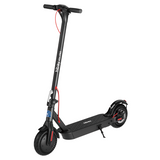

Wisconsin allows electric scooters on roads, sidewalks, bike lanes and bike paths, but only electric scooters that weigh under 100 pounds and can't go faster than 20 mph on the motor, and no one may ride one faster than 15 mph. E-bikes are treated like bicycles: no license, registration or title, as long as the motor is 750 watts or less and the e-bike is Class 1, 2 or 3. Riders under 16 can't ride a Class 3. Here's what the statutes say, where you can ride, and which rides fit.
Wisconsin electric scooter and e-bike laws at a glance
| Electric scooter | E-bike | |
|---|---|---|
| What counts | Under 100 pounds, handlebars, electric motor, 20 mph top speed on the motor | Working pedals, motor of 750 watts or less, Class 1, 2 or 3 |
| Riding speed | 15 mph at most, everywhere you can ride it | Motor help stops at 20 mph (Class 1 and 2) or 28 mph (Class 3) |
| License, registration, title | Not required in state law | Not required |
| Minimum age | No state minimum | 16 for Class 3; no state minimum for Class 1 and 2 |
| Helmet | No state rule | No state rule |
| Sidewalks | Allowed unless your city or county bans it | Only where your city allows bicycles on sidewalks |
| Bike lanes and paths | Allowed; 15 mph on bike paths | Allowed, unless a local or DNR rule bans e-bikes there |
| At night | White front light, red rear reflector or light | White front light, red rear reflector or light |
These rules come from Wisconsin Statutes chapters 340 to 349. The sources are listed at the end.
Electric scooter laws in Wisconsin
Which electric scooters count
Wisconsin law defines an electric scooter as a device that weighs less than 100 pounds, has handlebars and an electric motor, runs only on that motor and human power, and has a top speed of no more than 20 mph on a paved, level surface on the motor alone. Electric scooters that can go faster than 20 mph aren't electric scooters under this definition, so the rules below don't cover them. Check with your city or the DMV before you ride one on public roads.
The 15 mph rule
A legal electric scooter can be built for 20 mph, but you can't ride it that fast. State law says no one may ride an electric scooter faster than 15 mph on any road, sidewalk, bike lane or bike path. Many electric scooters have a speed mode or a speed-limit setting in the app, which makes the rule easier to keep.
Where you can ride an electric scooter
- Roads. Ride as close to the right edge as is practical, except when passing, turning left or avoiding hazards, and stay off any road signed as closed to electric scooters. Two riders may ride side by side if they don't hold up traffic. Cities and counties may ban electric scooters on roads with a speed limit over 25 mph.
- Sidewalks. Allowed by state law, unless your city or county bans it. Yield to pedestrians and bicyclists, and give an audible warning before passing.
- Bike lanes and bike paths. Allowed, at 15 mph at most on a bike path. Ride on the right of a two-way path, give a warning before passing, and yield when you enter.
Cities and counties can also set parking rules for electric scooters and can restrict or ban rental electric scooters, so check local rules in Milwaukee, Madison or wherever you ride.
License, registration and age
Wisconsin law treats an electric scooter as a motor vehicle only where a statute specifically says so, and the state's registration and driver's license chapters don't mention electric scooters. So an electric scooter within the definition needs no plate or driver's license. State law sets no minimum age and no helmet rule, though WisDOT recommends a helmet on every ride.
E-bike laws in Wisconsin
The three classes and the 750-watt limit
Wisconsin defines an e-bike as a bicycle with fully working pedals and an electric motor of 750 watts or less that fits one of three classes:
- Class 1: the motor helps only while you pedal and stops helping at 20 mph.
- Class 2: the motor can move the e-bike on its own, with a throttle, and stops helping at 20 mph.
- Class 3: the motor helps only while you pedal and stops helping at 28 mph. A Class 3 e-bike must have a speedometer.
Makers must put a label on every e-bike showing its class, the speed where the motor stops helping, and the motor's wattage. If someone changes an e-bike's class, they must put on a new label. The e-bike must meet the federal bicycle safety standard, and the motor must stop when you brake or stop pedaling. For more on the classes, see our e-bike classes guide.
License, registration and age
An e-bike has the same rights and duties as a bicycle. State law says e-bike riders aren't covered by the rules on driver's licenses, registration, titles or financial responsibility. No one under 16 may ride a Class 3 e-bike, though a younger rider can be a passenger on a Class 3 built to carry one. There's no state minimum age for Class 1 or 2, and no state helmet rule.
Where you can ride an e-bike
- Roads and bike lanes. The same as a bicycle: ride near the right edge, at most two side by side, within one lane.
- Sidewalks. Not allowed unless your city permits bicycles on sidewalks. That's the opposite of the electric scooter rule.
- Bike paths and trails. E-bikes may ride with the motor on, unless the city or county that runs the path bans them by ordinance, or the DNR bans them by rule on its trails.
- State trails. Riders 16 and older need a state trail pass to ride on certain state trails: $25 for the year or $5 a day in 2026. Check each trail's page for its e-bike rules before you ride.
Lights and brakes
From dusk, on any road, sidewalk, bike lane or path, an electric scooter or e-bike needs a white front light visible from at least 500 feet and a red rear reflector visible from 50 to 500 feet. A red rear light visible from 500 feet can replace the reflector. On an electric scooter, the reflector can be a strip of reflective tape of at least 2 square inches. Both need a brake in good working order, and neither may have a siren. For more on lights, see our night riding guide.
Electric scooters and e-bikes that fit Wisconsin's rules
| Ride | Top speed (maker) | Weight or motor (maker) | Wisconsin category |
|---|---|---|---|
| Hiboy S2 Pro electric scooter | 19 mph | 37.4 lbs | Electric scooter; keep to the state riding limit |
| Hiboy KS4 Pro electric scooter | 19 mph | 40.6 lb | Electric scooter; keep to the state riding limit |
| Segway F3 electric scooter | About 20 mph | 42 lb | Electric scooter; keep to the state riding limit |
| Hiboy C1 folding e-bike | 20 mph on the throttle or pedal assist | 350W rated, 648W peak | E-bike, Class 2 style |
| Segway Xafari fat tire e-bike | 20 mph as Class 2, 28 mph as Class 3 | 750W | E-bike; set as Class 3, riders 16 and up |
The Segway Max G3 reaches up to 28 mph with its high-speed setting on, so it sits outside Wisconsin's 20 mph definition. Bought from us, each ride has a one-year Wilson's warranty against manufacturing defects, and we manage the claim with the maker. Standard shipping is free (see our shipping policy). Browse commuter electric scooters or commuter e-bikes.
Where can Wisconsin riders get service?
We don't have a shop in Wisconsin. Our shops are in New York City, San Francisco and Miami, and our technicians service every brand of electric scooter and e-bike, wherever you bought it, with express service at every shop. A simple inspection is always free; a full diagnosis with disassembly or test equipment is $30, waived on repairs over $100. Starting prices, parts and labor included: brake repair from $25, flat tire repair from $40, tune-up and safety check from $50, and winter cleanup and storage prep from $30. Book a repair.
Riding in a nearby state? See our Minnesota, Iowa, Illinois and Michigan guides, or all our state law guides.
Frequently asked questions
Are electric scooters legal in Wisconsin?
Yes, if they weigh under 100 pounds and top out at 20 mph or less on the motor. You can ride one on roads, sidewalks, bike lanes and bike paths, at 15 mph at most, unless your city or county restricts it.
Can you ride an electric scooter on the sidewalk in Wisconsin?
Yes, unless your city or county bans it. Yield to pedestrians and bicyclists, and give an audible warning before you pass.
How fast can an electric scooter go in Wisconsin?
It can be built for up to 20 mph, but state law caps riding speed at 15 mph on roads, sidewalks, bike lanes and bike paths.
Do you need a license for an e-bike in Wisconsin?
No. State law says e-bike riders aren't subject to the rules on driver's licenses, registration, titles or financial responsibility.
How old do you have to be to ride an e-bike in Wisconsin?
16 for a Class 3 e-bike. State law sets no minimum age for Class 1 or Class 2.
Can you ride an e-bike on Wisconsin state trails?
Often, yes. State law allows e-bikes on bikeways with the motor on, but the DNR can ban them on its trails by rule, and cities and counties can ban them by ordinance. Riders 16 and older need a state trail pass on certain trails.
Sources: Wisconsin Statutes (2023-24, updated through 2025 Wis. Act 247): §340.01 (definitions, including electric bicycle and electric scooter), §346.02, §346.80, §346.803, §346.804, §346.805, §346.806 (e-bikes), §346.94 (sidewalks; electric scooters), §347.489 (lights, brakes, e-bike labels), §349.18 and §349.237 (local rules), §341.05. Wisconsin Legislative Council Act memos on 2019 Wisconsin Acts 11 and 34. WisDOT, bicycle rules. Wisconsin DNR, state trail pass (2026).
This guide is general information, not legal advice. Laws and city rules change, so check the current rules before you ride.


