


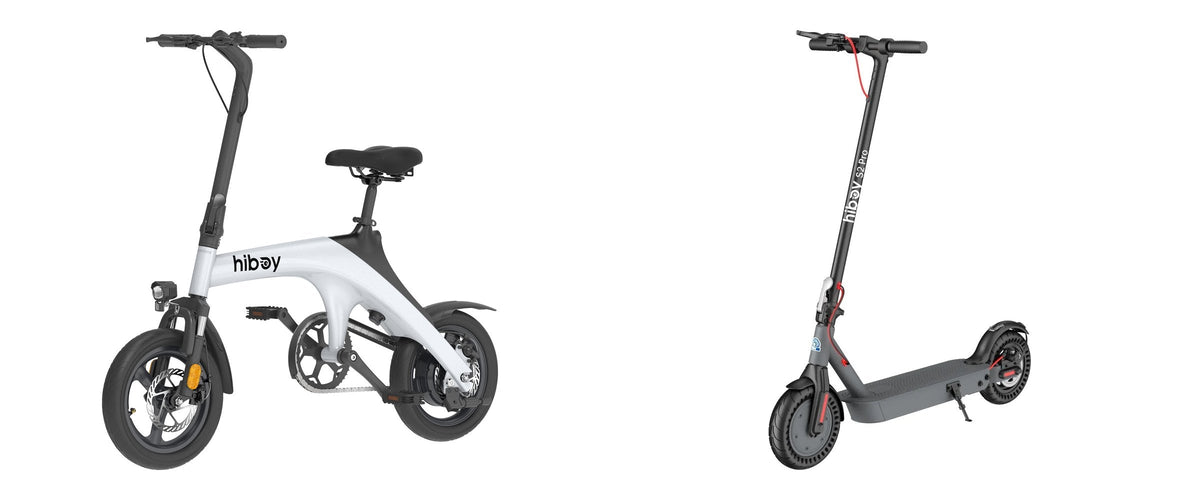


In South Carolina, an e-bike needs no license, registration or insurance if it has working pedals, a motor of 750 watts or less and a motor-powered top speed under 20 mph; its rider follows the bicycle rules. An electric two- or three-wheeler with a motor over 750 watts and up to 1,500 watts is a moped under state law, which means registration, a plate and a moped or driver's license on public roads. South Carolina's code doesn't define stand-up electric scooters at all. Here's what the law says, including the 2026 change that lets cyclists treat stop signs as yield signs.
South Carolina e-bike and electric scooter rules at a glance
| E-bike | Electric scooter | |
|---|---|---|
| What counts | Pedals, a motor of 750 watts or less, motor-powered top speed under 20 mph | Not defined in the state code |
| Driver's license | Not required | No state rule; a moped license if it meets the moped definition |
| Registration and plates | Not required | Required if it meets the moped definition |
| Insurance | Not required | Not required for mopeds |
| Top speed | Motor help under 20 mph | Mopeds: 35 mph |
| Age | No state minimum | Mopeds: license from 15 |
| Helmet | No bicycle helmet law; the under-21 law doesn't say whether e-bikes count | Mopeds: required under 21 |
| Where to ride | Where bicycles ride | Mopeds: not on roads posted over 55 mph; check your city |
The e-bike rules come from South Carolina Code §56-1-10(29) and §56-5-3520, added in 2020. The moped rules are in §56-1-10(26) and Title 56, chapter 2. The sources are listed at the end.
What counts as an e-bike in South Carolina?
South Carolina doesn't use the Class 1, 2 and 3 system that many states have adopted. It has one definition, the "electric-assist bicycle" or "bicycle with a helper motor". To count, it needs:
- two or three wheels and fully working pedals;
- an electric motor of no more than 750 watts, or one horsepower;
- a motor-powered top speed of less than 20 mph, with a 170-pound rider on a level, paved surface;
- a motor that stops helping when you brake or stop pedaling;
- a permanent label from the maker showing its wattage and top assisted speed.
The law says these are not mopeds, and that their riders are subject to every rule that applies to bicyclists. If you modify an e-bike so its speed changes, you must replace the label. For how the class system works in other states, see e-bike classes explained.
That "less than 20 mph" wording is stricter than the class system. Most e-bikes sold in the US are built so the motor stops helping at 20 mph (Class 1 and 2) or 28 mph (Class 3). A 20 mph e-bike sits right on South Carolina's line rather than under it, and a 28 mph Class 3 e-bike is over it. The law doesn't say how such an e-bike is treated, and we won't guess. If yours goes past 20 mph on the motor, ask the South Carolina Department of Motor Vehicles how it classifies your model.
Do you need a license or registration for an e-bike in South Carolina?
No. South Carolina sets no license, registration, title or insurance rule for an e-bike that meets the definition. The law puts its rider under the bicycle rules: on the road, you have the same rights and duties as a driver, you ride as far right as is practicable (the shoulder is allowed), and no more than two abreast except on bike paths.
When is it a moped?
South Carolina defines a moped by its motor, not its looks. It can have pedals or not, has no more than three wheels, and runs on gas, electricity or both. For an electric model, the motor input must be over 750 watts and no more than 1,500 watts. A moped on a public road needs:
- A license: a driver's license, or a moped operator's license, which the state issues from age 15 after an eyesight test and a test on signs and traffic laws. Under 16, a moped license holder may ride alone in daylight only, and at night only with a licensed driver aged 21 or older.
- Registration and a plate: mopeds are registered with the Department of Motor Vehicles and get a special plate. A title is optional, and insurance isn't required.
- A helmet under 21.
- Riding limits: no faster than 35 mph, not on roads posted over 55 mph except to cross them, in the farthest right lane on multi-lane roads, and with the headlight on at all times.
A moped registered in another state can be ridden in South Carolina until its owner moves to the state or has ridden it there for more than 180 days.
How old do you have to be, and do you need a helmet?
South Carolina sets no minimum age for e-bikes, and it has no helmet law for bicycles. Its helmet law requires anyone under 21 on a "two-wheeled motorized vehicle" to wear an approved helmet. That plainly covers mopeds and motorcycles; the law doesn't say whether an e-bike counts. Our advice is simple: wear one at every age. See our helmets and safety gear.
New in 2026: the stop-as-yield law
Since May 18, 2026, South Carolina law lets a cyclist:
- At a stop sign: slow down, stop only if needed to avoid an immediate hazard, yield to pedestrians and traffic, and then go through or turn without stopping.
- At a red light: come to a complete stop, yield to oncoming traffic that's an immediate hazard, then go through with caution. A right turn on red is allowed after slowing and yielding, and a left onto a one-way road after stopping and yielding.
The law says "cyclist" and doesn't define the word. E-bike riders follow the bicycle rules, but riders of mopeds and electric scooters shouldn't assume it covers them.
Where can you ride an e-bike in South Carolina?
- Roads and bike lanes: anywhere a bicycle may ride, following the bicycle rules.
- Sidewalks: state law sets no rule for bicycles on sidewalks, so your city's rules decide. Check them before you ride.
- State forests: in October 2025 the South Carolina Forestry Commission said it will allow e-bikes that meet the state definition everywhere traditional bicycles are allowed on state forests, and that some routes may become foot traffic only. Check the forest's current rules before you ride.
- Other trails and parks: the agency that manages the trail decides.
After dark, an e-bike needs a white front lamp visible from 500 feet and a red rear reflector; a red rear lamp is allowed too. See night riding light rules.
Are electric scooters legal in South Carolina?
South Carolina's code doesn't define stand-up electric scooters or set rules for them. A stand-up electric scooter has no pedals, so it isn't an e-bike. The state's "electric personal assistive mobility device" rules cover self-balancing devices only, not electric scooters.
The one definition that can reach an electric scooter is the moped. If your electric scooter, with a seat or without, has a motor over 750 watts and up to 1,500 watts, its specs match the wording of the moped definition. The law doesn't say whether rated or peak power counts, and many electric scooters list both. Below 750 watts, or above 1,500, the code has no category that clearly fits.
That leaves real gaps, and we won't guess how an officer or court would fill them. Before you ride an electric scooter on a public road, ask the South Carolina Department of Motor Vehicles how it treats your model, and check your city's rules, since many South Carolina cities set their own. Whatever the answer, wear a helmet and use lights at night. For the difference between the two, see electric scooter vs moped.
Which of our rides fit South Carolina's rules?
For e-bikes, the test is 750 watts or less and a motor-powered top speed under 20 mph. Figures are the makers', from our product pages:
| E-bike | Motor (maker) | Top speed (maker) | South Carolina fit |
|---|---|---|---|
| Hiboy C1 folding e-bike | 350W rated, 648W peak | 20 mph | Motor fits; 20 mph is on the line, not under it |
| Hiboy EX6F folding e-bike | 500W rated, 750W peak | 20 mph on the throttle, up to 25 mph with pedal assist | Motor fits; assist to 25 mph is over the line |
| Hiboy EX9 e-bike | 1000W peak | 28 mph (Class 3) | Outside the e-bike definition |
For electric scooters, the code sets no limits to compare against. What we can show is where each model's motor sits against the moped wording:
| Electric scooter | Motor (maker) | Against the 750 to 1,500 W moped range |
|---|---|---|
| Hiboy S2 Pro | 500W rated, 600W peak | Below it |
| Segway F3 | 450 W nominal, 1000 W max | Nominal power below it, max power inside it |
| Segway Max G3 | 2000W max power | Above it |
Bought from us, each ride has a one-year Wilson's warranty against manufacturing defects, and we manage the claim with the maker. Standard shipping is free to South Carolina and the rest of the lower 48 (see our shipping policy). Browse commuter e-bikes or all electric scooters.
Where can South Carolina riders get service?
We don't have a shop in South Carolina. Our shops are in New York City, San Francisco and Miami, and our technicians service every brand of electric scooter and e-bike, wherever you bought it, with express service at every shop. A simple inspection is always free; a full diagnosis with disassembly or test equipment is $30, waived on repairs over $100. Starting prices, parts and labor included: brake repair from $25, flat tire repair from $40, tune-up and safety check from $50. Book a repair.
Riding in a neighboring state? See our North Carolina and Georgia guides, or all our state law guides.
Frequently asked questions
Do you need a license for an e-bike in South Carolina?
No. An e-bike with pedals, a motor of 750 watts or less and a motor-powered top speed under 20 mph needs no license, registration or insurance. Its rider follows the bicycle rules.
Are electric scooters legal in South Carolina?
South Carolina's code doesn't define stand-up electric scooters. One with a motor over 750 watts and up to 1,500 watts matches the wording of the moped definition. Ask the SCDMV and your city how they treat your model before riding on public roads.
Does South Carolina have e-bike classes?
No. State law has one e-bike definition, with a 750-watt motor limit and a motor-powered top speed under 20 mph, rather than Class 1, 2 and 3.
Is a 1,000-watt e-bike a moped in South Carolina?
By the wording of the law, an electric two- or three-wheeler with a motor over 750 watts and up to 1,500 watts is a moped, with or without pedals; the law doesn't say whether rated or peak power counts. A moped needs registration, a plate and a moped or driver's license on public roads.
Do you need a helmet on an e-bike in South Carolina?
There's no bicycle helmet law. The helmet law for riders under 21 covers "two-wheeled motorized vehicles" and doesn't say whether e-bikes count. We recommend a helmet at every age.
Can e-bikes roll through stop signs in South Carolina?
Since May 18, 2026, a cyclist may slow, yield and go through a stop sign without stopping unless there's an immediate hazard. The law doesn't define "cyclist", and e-bike riders follow the bicycle rules.
Sources: South Carolina Code of Laws, Title 56, chapter 1 (§56-1-10 definitions; §56-1-1720 moped license), chapter 2 (§56-2-3000 to 3070, mopeds) and chapter 5 (§56-5-3310 EPAMDs, §56-5-3420 to 3530 bicycles, §56-5-3660 helmets, §56-5-970 signals); 2020 Act No. 114 (H.3174); 2026 Act No. 173 (S.812); South Carolina Forestry Commission, response to the e-bike study (October 2025). Checked November 23, 2026.
This guide is general information, not legal advice. Laws and city rules change, so check the current rules before you ride.


