

In Virginia, neither an e-bike nor a stand-up electric scooter needs a driver's license, registration or insurance. An e-bike must have pedals, a seat and a motor of no more than 750 watts, in Class 1, 2 or 3. An electric scooter must weigh under 100 pounds and can't be ridden faster than 20 mph anywhere. Riders under 14 need an adult with them on an electric scooter or a Class 3 e-bike. Here's what the Code of Virginia says, and which rides fit.
Virginia e-bike and electric scooter rules at a glance
| E-bike | Electric scooter | |
|---|---|---|
| What counts | Pedals, a seat and an electric motor of no more than 750 watts, Class 1, 2 or 3 | Electric, under 100 pounds, no VIN, 20 mph or less on the motor alone |
| Driver's license | Not required | Not required: the code says it isn't a motor vehicle |
| Registration, title and insurance | Not required | Not required |
| Top speed | Motor help stops at 20 mph (Class 1 and 2) or 28 mph (Class 3) | 20 mph, at any time and place |
| Age | Under 14 on a Class 3: only with someone 18 or older | Under 14: only with someone 18 or older |
| Helmet | Required on Class 3, rider and passenger; under 15 where your locality says so | Under 15 where your locality says so |
| Sidewalks | Allowed unless signs ban it | Allowed unless a local ordinance or signs ban it |
| Interstates | Not allowed | Not allowed |
The rules come from Title 46.2 of the Code of Virginia, mainly §46.2-100, §46.2-904.1 and §46.2-908.1, and the Virginia State Parks regulations. The sources are listed at the end.
What are the e-bike classes in Virginia?
Virginia's code calls an e-bike an "electric power-assisted bicycle". It needs no more than three wheels, working pedals, a seat and an electric motor with an input of no more than 750 watts. Then it falls into one of three classes:
- Class 1: the motor helps only while you pedal and stops helping at 20 mph.
- Class 2: the motor can move the e-bike on its own, with a throttle, and stops helping at 20 mph.
- Class 3: the motor helps only while you pedal and stops helping at 28 mph. It must have a speedometer that shows miles per hour.
Since January 1, 2021, makers and distributors must fix a label to every e-bike showing its class, top assisted speed and motor wattage. Anyone who modifies the motor's speed or how it engages must replace that label. The e-bike must also meet the federal safety rules for bicycles. For how the classes compare across states, see e-bike classes explained.
Do you need a license or registration for an e-bike in Virginia?
No. Section 46.2-904.1 says an e-bike and its rider are not subject to the code's rules on driver's licenses, registration, certificates of title, financial responsibility, off-highway motorcycles or license plates. So no insurance is needed either. On the road, an e-bike rider has the same rights and duties as a bicycle rider.
You can choose to register your e-bike's serial number with your local police department. It's optional, but it helps if the e-bike is ever stolen.
Are electric scooters legal in Virginia?
Yes. Virginia is one of the few states with a clear definition for them. The code puts stand-up and seated electric scooters in its "motorized skateboard" category, which covers any electric ride, with or without handlebars, that:
- lets the rider sit or stand;
- has no manufacturer-issued vehicle identification number (VIN);
- is powered in whole or in part by an electric motor;
- weighs less than 100 pounds; and
- goes no faster than 20 mph on a paved, level surface on the motor alone.
The code says this kind of ride isn't a motor vehicle, and Virginia's driver's license and registration rules apply to motor vehicles. So you don't need a license, registration, title or plates to ride one.
What does apply:
- A 20 mph limit, everywhere. No one may ride one faster than 20 mph at any time or place.
- Faster models are capped, too. An electric scooter that would otherwise fit the definition but can go faster than 20 mph may still not be ridden faster than 20 mph.
- Under 14: only under the immediate supervision of someone at least 18.
- Roads: keep as far right as is safely practicable, with the usual exceptions for passing, left turns and hazards, and ride no more than two abreast.
- No Interstates.
- Lights after dark: an electric scooter with handlebars needs a white headlight visible from 500 feet and a red rear reflector visible from 600 feet.
Cities and counties can also regulate shared, for-hire electric scooters, so rental rules differ from town to town.
Can you ride on the sidewalk in Virginia?
Usually, yes, which surprises a lot of riders. Virginia law lets bicycles and e-bikes use sidewalks, and electric scooters too, unless a local ordinance bans them. A county, city or town can ban riding on designated sidewalks and crosswalks, and it must post signs where it does.
On a sidewalk, shared-use path or crosswalk, you have the rights and duties of a pedestrian. You must yield to people on foot and give an audible signal before you pass them. Don't park an e-bike or electric scooter where it blocks foot traffic. Breaking these rules can bring a civil penalty of up to $50.
How old do you have to be, and do you need a helmet?
- Class 1 and Class 2 e-bikes: no state minimum age.
- Class 3 e-bikes and electric scooters: riders under 14 need the immediate supervision of someone at least 18.
- Helmets, statewide: every rider and passenger on a Class 3 e-bike must wear a properly fitted and fastened bicycle helmet that meets CPSC or ASTM standards.
- Helmets, locally: a county, city or town may require everyone 14 and younger to wear a helmet on a bicycle, e-bike or electric scooter. Since July 1, 2026, those local rules can cover electric scooters too. The fine is $25, and it's waived for a first offense or if you buy a helmet before the fine is imposed.
Some websites say every Virginia rider 14 and under must wear a helmet. That's only true where the locality has passed an ordinance, so check your city or county. We'd wear one at any age: see our helmets and safety gear.
Where can you ride an e-bike in Virginia?
- Anywhere bicycles are allowed: streets, highways, shoulders, bike lanes and bicycle or shared-use paths, but not Interstates.
- Paths can set limits. The locality or state agency that runs a path can ban Class 3 e-bikes on it. It can ban Class 1 and 2 only after notice and a public hearing, and only for public safety or to comply with other laws.
- Natural-surface trails: the managing agency can regulate e-bikes on dirt trails marked as nonmotorized.
- Virginia State Parks: bicycles and e-bikes may only use designated bicycle paths, and only Class 1 and Class 2 e-bikes are allowed. Leave a Class 3 at home.
Riding after dark? Your e-bike needs the same white headlight and red reflector as an electric scooter. See night riding light rules for what to look for in lights.
When is it not an e-bike?
A ride with no pedals, or with a motor over 750 watts, isn't an e-bike in Virginia. Depending on its build, it may be a moped: a seat at least 24 inches high, a motor of 1,500 watts input or less, and no more than 35 mph. Mopeds must be titled and registered, their riders must be at least 16 and carry photo ID, and the rider and any passenger must wear a helmet plus eye protection. Over 35 mph, the code treats a moped as a motorcycle.
Electric dirt bikes and e-motorbikes built for off-road use are off-road motorcycles under Virginia law, not e-bikes, and Virginia's off-road motorcycle rules apply to them. Our electric scooter vs moped guide explains the difference.
Is Virginia changing its e-bike and electric scooter laws?
It may. In 2026 the General Assembly directed the DMV to set up a work group on the safety of e-bikes, electric scooters, self-balancing devices and mopeds, with recommendations due to the House and Senate transportation committees by November 1, 2026. Nothing in the rules above has changed yet, but the 2027 session could bring changes, so check before you ride.
Which of our e-bikes and electric scooters fit Virginia's rules?
Figures are the makers', from our product pages. First, e-bikes, where Virginia's limit is a motor of no more than 750 watts:
| E-bike | Motor (maker) | Top speed (maker) | Good for |
|---|---|---|---|
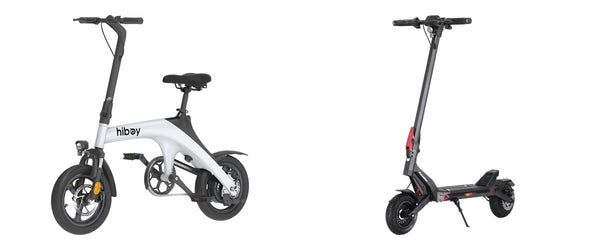
| Hiboy C1 folding e-bike | 350W rated, 648W peak | Up to 20 mph, throttle or pedal assist | Short commutes and small apartments: it folds |
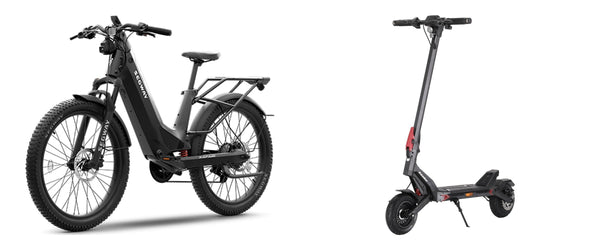
| Segway Xafari fat tire e-bike | 750W rated | Class 2: 20 mph; Class 3: 28 mph | Rough roads and longer rides; wear a helmet in Class 3 |
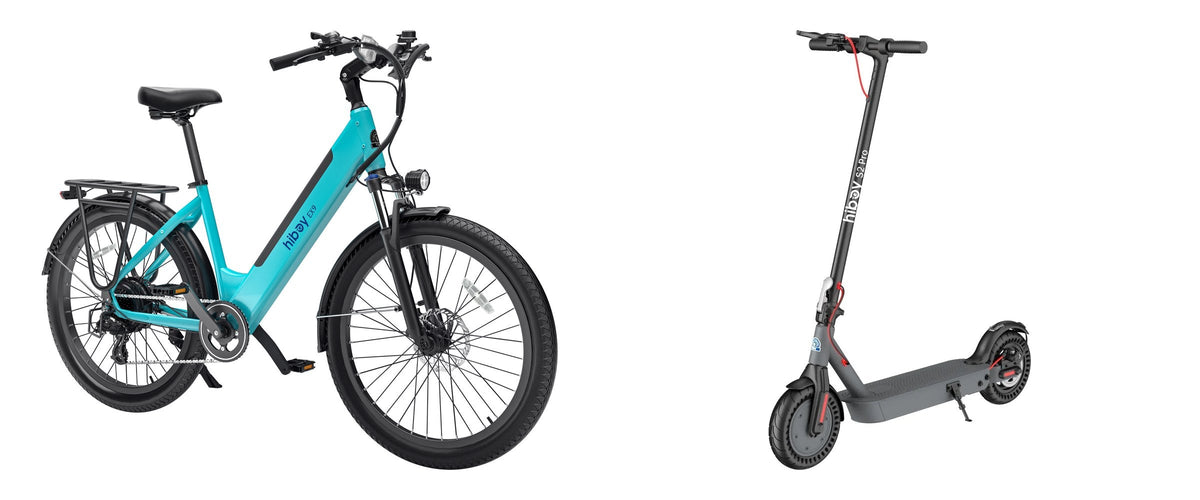
The Hiboy EX9 is a closer call: its motor is 750W rated with 1000W peak. Virginia's code says "input of no more than 750 watts" without saying whether that means rated or peak power, so check the class label and wattage on any e-bike before you buy.
Next, electric scooters. Virginia's definition needs one under 100 pounds that goes no faster than 20 mph on the motor. These are well inside both:
| Electric scooter | Top speed (maker) | Weight (maker) | Good for |
|---|---|---|---|
| Segway E3 Pro | About 20 mph | About 40 lb | Beginners and city commutes |
| Segway F3 | About 20 mph | About 42 lb | Longer commutes, with a front disc brake |
| Hiboy S2 Pro | 19 mph | 37.4 lbs | Daily commuting on a budget |
| Segway E2 Pro | Up to 18.6 mph | Folds for carrying | Campus and short city trips |
Many of the electric scooters we sell go faster than 20 mph. Under Virginia law you may still not ride them faster than 20 mph, so in Virginia that extra speed is for private property only. Browse all electric scooters or commuter e-bikes.
Bought from us, each ride has a one-year Wilson's warranty against manufacturing defects, and we manage the claim with the maker. Standard shipping is free to Virginia and the rest of the lower 48 (see our shipping policy).
Where can Virginia riders get service?
We don't have a shop in Virginia. Our shops are in New York City, San Francisco and Miami, and our technicians service every brand of electric scooter and e-bike, wherever you bought it, with express service at every shop. A simple inspection is always free; a full diagnosis with disassembly or test equipment is $30, waived on repairs over $100. Starting prices, parts and labor included: brake repair from $25, flat tire repair from $40, tune-up and safety check from $50. Book a repair.
Riding across the state line? See our West Virginia, North Carolina and Maryland guides, or all our state law guides.
Frequently asked questions
Do you need a license for an electric scooter in Virginia?
No. Virginia's code says an electric scooter that fits its definition isn't a motor vehicle, so no driver's license, registration or title is needed. It must weigh under 100 pounds and be ridden no faster than 20 mph.
Do you need a license for an e-bike in Virginia?
No. A Class 1, 2 or 3 e-bike with a motor of no more than 750 watts needs no driver's license, registration, title, plates or insurance.
How old do you have to be to ride an electric scooter in Virginia?
There's no fixed minimum age, but a rider under 14 must be under the immediate supervision of someone at least 18. The same rule applies to Class 3 e-bikes.
Can you ride an electric scooter on the sidewalk in Virginia?
Yes, unless a local ordinance bans it. Where riding is banned, signs must be posted. On a sidewalk, yield to pedestrians and give an audible signal before passing.
Do you need a helmet on an e-bike in Virginia?
On a Class 3 e-bike, yes, for the rider and any passenger. On other e-bikes and on electric scooters, it depends on your locality: counties, cities and towns may require helmets for riders 14 and younger.
Can you ride an e-bike in Virginia State Parks?
Only Class 1 and Class 2 e-bikes, and only on designated bicycle paths. Class 3 e-bikes aren't allowed in state parks.
How fast can an electric scooter go in Virginia?
No faster than 20 mph, at any time and in any place, even if the electric scooter is built to go faster.
Sources: Code of Virginia, on the Virginia Law website: §46.2-100, definitions; §46.2-903 and §46.2-904 (sidewalks); §46.2-904.1 (e-bikes); §46.2-905 (roadways); §46.2-906.1 (local helmet ordinances); §46.2-908.1 (speed and age); §46.2-1015 (lights); §46.2-914 (mopeds); 4VAC5-30-276 (Virginia State Parks, bicycle path use); 2026 Acts, chapter 737 (DMV work group). Checked November 23, 2026.
This guide is general information, not legal advice. Laws and local rules change, so check the current rules before you ride.